
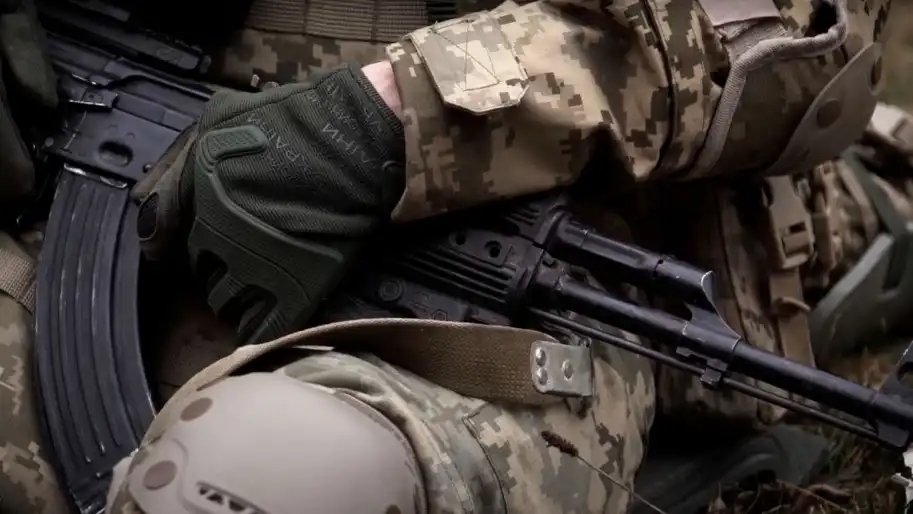

A bill No. 14110 has been submitted to the Verkhovna Rada of Ukraine, which prohibits the production, trade and import of nicotine pads. At the same time, a similar discussion has already taken place in Poland, and local journalists have focused on one significant factor - the spread of nicotine pads among soldiers in the army.
In particular, Defence24 journalists spoke with the former head of the Military Engineering Department of the General Command of the Polish Armed Forces, retired General Bohuslav Benbenek, who told what the ban on nicotine pads threatens for servicemen.
One lit cigarette on the front line betrays an entire unit to the enemy, the general explained, and smoking in places where explosives are stored can cause a great tragedy. That is why nicotine products that do not emit either light or smell have recently become very popular among Polish soldiers and officers.
"This is not about nicotine propaganda, but about choosing the lesser evil in military realities. Safety is a priority when it comes to nicotine. From the point of view of a commander, I know one thing: if a soldier needs nicotine, it is better for it to be such a pad than for him to risk his life by lighting a cigarette under enemy fire," Benbenek noted.
The article emphasizes that the general's words are fully confirmed by the experience of the war in Ukraine, when russian occupiers are found by the smell of tobacco or by cigarette lights, because nicotine pads are prohibited in russia. At the same time, Ukrainian military personnel use nicotine sachets for security reasons.
As Polish journalists write, cigarettes were an invariable attribute of soldiers' lives from World War I, when tobacco was part of rations, to the conflicts of the Cold War, when every second American soldier smoked in Vietnam. However, with increased attention to health and the advent of modern technologies, such as night vision and thermal imaging, the military began to look for safer and more inconspicuous alternatives to smoking. In particular, nicotine sachets are very popular among NATO troops. For example, in the US army, every fourth soldier uses them, and in Finland, more than 30% of servicemen.
Who we are: About us, Contacts. How we write news and our principles: Editorial code. We did our best. If you found this valuable – please support us.
To request a correction, please send an email.