


On October 24, 1991, the Verkhovna Rada of Ukraine declared the state's nuclear-free status, although it was the third most powerful nuclear state in the world after the United States and the aggressor country of russia. Ukrainian News Agency will tell you about the historical events that led to far-reaching consequences.
Ukraine's incomplete nuclear triad
In the early 1990s, Ukraine had two elements of the so-called nuclear triad - intercontinental ballistic missiles and strategic aviation. 176 intercontinental ballistic missiles with thousands of warheads were deployed on the territory of the state. Ukraine also possessed Tu-95MS and Tu-160 strategic bombers, and also had up to four thousand tactical nuclear warheads.
They could cover a distance of up to 10,000 kilometers, had from 6 to 10 warheads and were able to bypass missile defense systems. These were the newest missiles, the expiration date of which could only be reached now. Ukraine had more than 100 large Tu-95MS and Tu-160 bombers. All of them could carry cruise missiles of various types, including nuclear warheads.
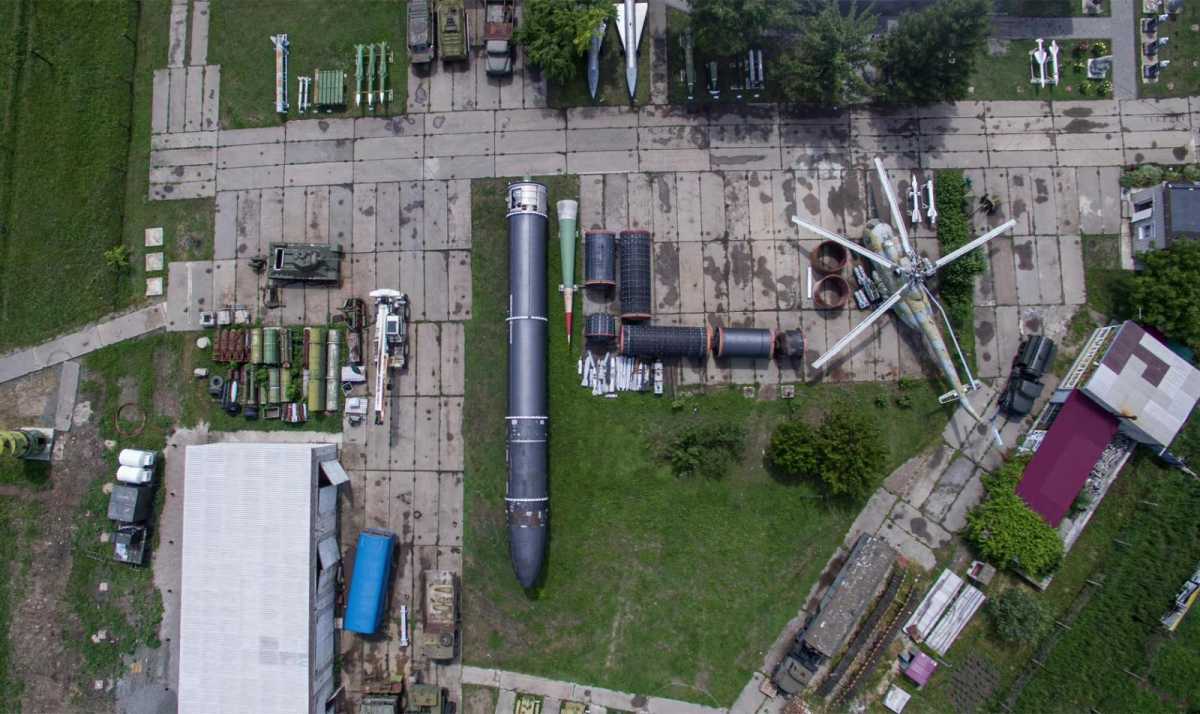 Photo: Museum of Strategic Missile Forces
According to expert estimates, Ukraine controlled from 1,514 to more than 2,100 strategic nuclear warheads in mine installations and on aircraft, as well as up to 4,200 tactical units that did not require centralized launch codes. After the collapse of the USSR, Ukraine became the legal owner of this entire arsenal.
At the same time, in the early 1990s, Great Britain had about 300 units, France - about 500, the USA - about 22,000, and russia - over 27,000 warheads.
The beginning of the end of the nuclear status
At the end of July 1991, US President George Bush and USSR President Mikhail Gorbachev concluded an agreement on the reduction of offensive weapons of the Soviet Union. Russia was entrusted with negotiating separately with the nuclear states - Ukraine, Belarus and Kazakhstan.
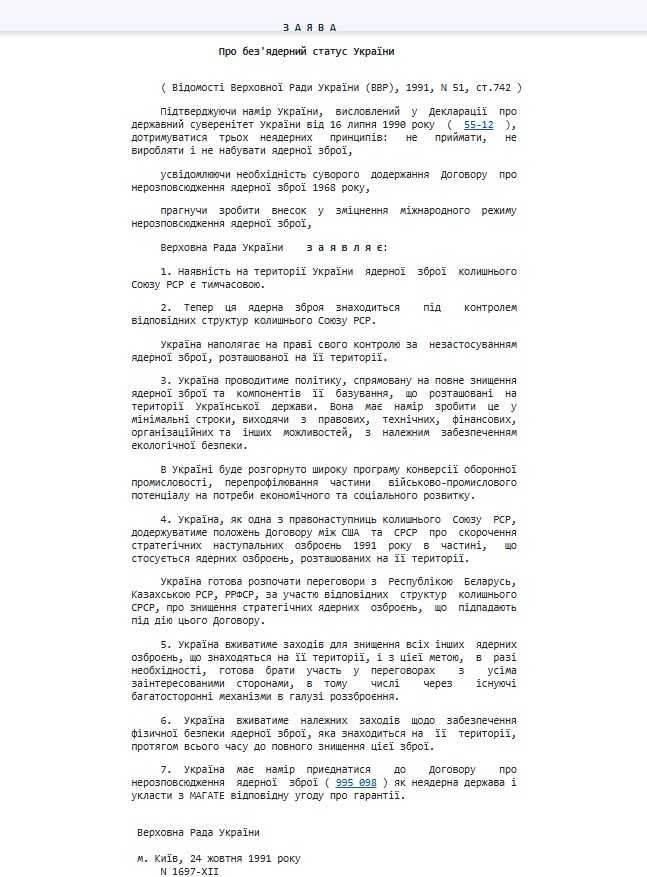
On October 24, the Verkhovna Rada of Ukraine declared the state's nuclear-free status and announced adherence to three principles - not to receive, not to produce and not to acquire nuclear weapons.
"Ukraine will pursue a policy aimed at the complete destruction of nuclear weapons and their deployment components located on the territory of the Ukrainian state. It intends to do this in the shortest possible time, based on legal, technical, financial, organizational and other capabilities, with proper environmental safety," one of the points of the document states.
The abandonment of nuclear weapons was supposed to open the way for Ukraine to enter into partnership relations with the West, financial and economic support. At that time, the national currency in the state was depreciating, enterprises were shutting down, and people were losing their jobs. Since Ukraine was completely dependent on foreign aid, it was forced to make compromises.
Complete disarmament of Ukraine
From November 1992 to May 1993, tactical nuclear weapons, along with their carriers, were transported to russia by train without any agreements between Moscow and Kyiv. On May 6, 1992, George Bush reported that Boris Yeltsin, then President of russia, had reported on the complete removal of tactical nuclear weapons from Ukraine.
As Ukrainian News Agency earlier reported, on February 25, 2022, the Verkhovna Rada appealed to the states - guarantors of the independence and sovereignty of Ukraine's borders, in accordance with the Budapest Memorandum, demanding urgent action to de-escalate and stop russia's military offensive against Ukraine.
Who we are: About us, Contacts. How we write news and our principles: Editorial code. We did our best. If you found this valuable – please support us.
To request a correction, please send an email.