
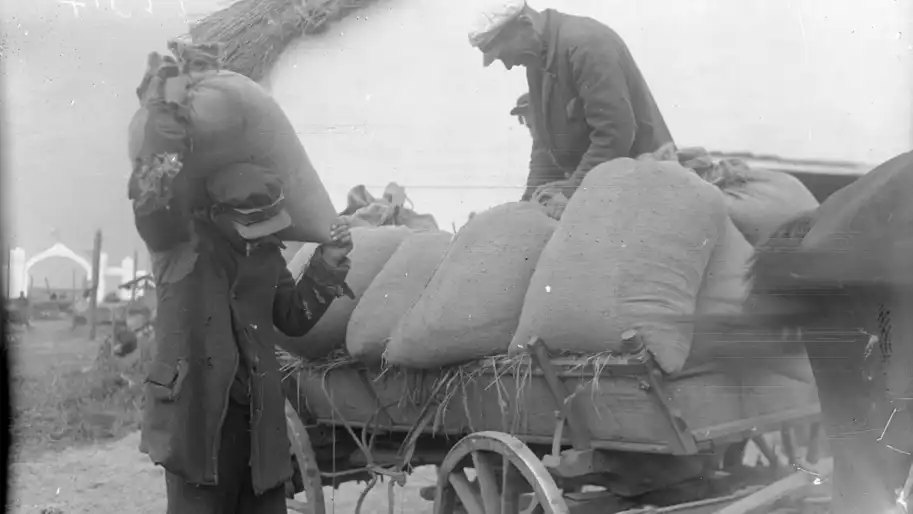

On August 7, 1932, the Soviet Union passed one of the harshest laws of the Stalin era - a document that officially aimed to "protect socialist property", but in reality became a means of mass terror against the Ukrainian peasantry. It is better known as the "Law on Five Ears of Grain".
The document, officially titled "The Law on the Protection of Property of State Enterprises, Collective Farms and Cooperatives and on the Strengthening of Public (Socialist) Property", provided for severe punishments for the theft of grain and other property. In "especially serious" cases - execution, in "mitigated" - 10 years of imprisonment with confiscation of property. It was impossible to appeal the sentence. Amnesty was not provided for.
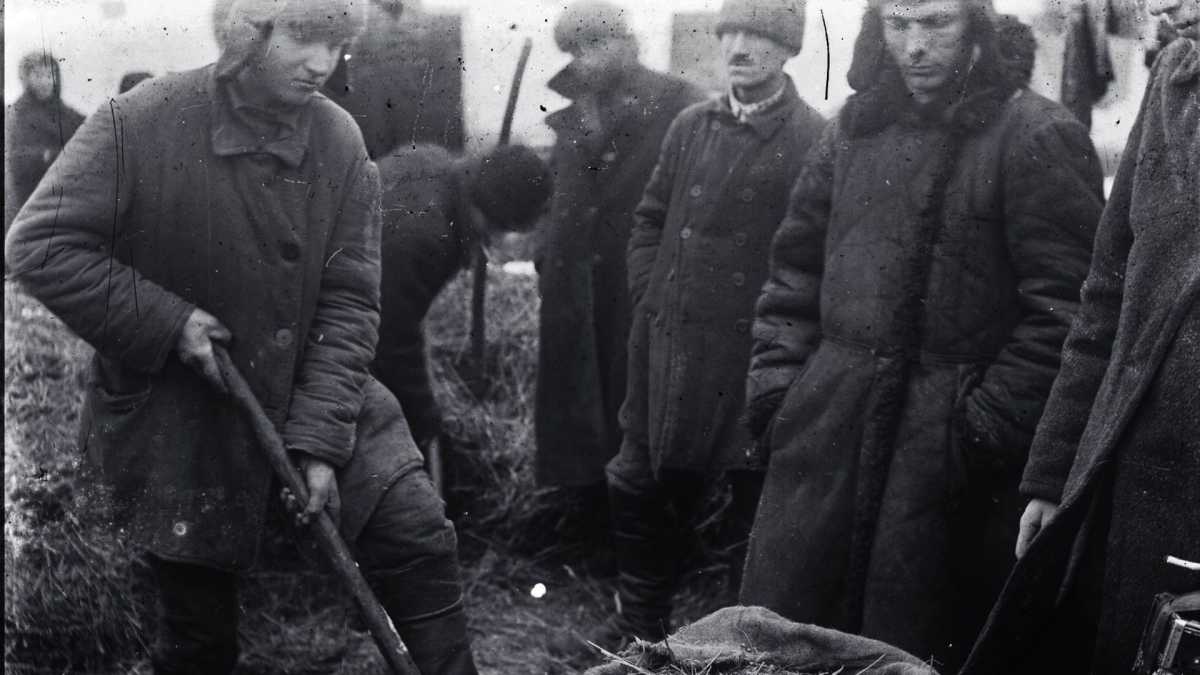 Searching for bread in village in Hryshynskyi district of Donetsk Region, 1930-1934
But why was it passed? In the late 1920s and early 1930s, a new stage of forced industrialization began in the Soviet Union. The construction of factories and plants required funds that the state did not have. The Soviet leadership decided to find a resource in the countryside - by exporting grain abroad. To do this, collectivization was introduced: peasants had to hand over what they had grown not to themselves, but to the state.
This process caused serious resistance. The Ukrainian peasantry - the most numerous in the USSR - actively protested against the loss of the right to dispose of the fruits of their labor. Yields were falling, grain procurement plans were not being implemented. In order to force the peasants to work and hand over grain, the state resorted to repression.
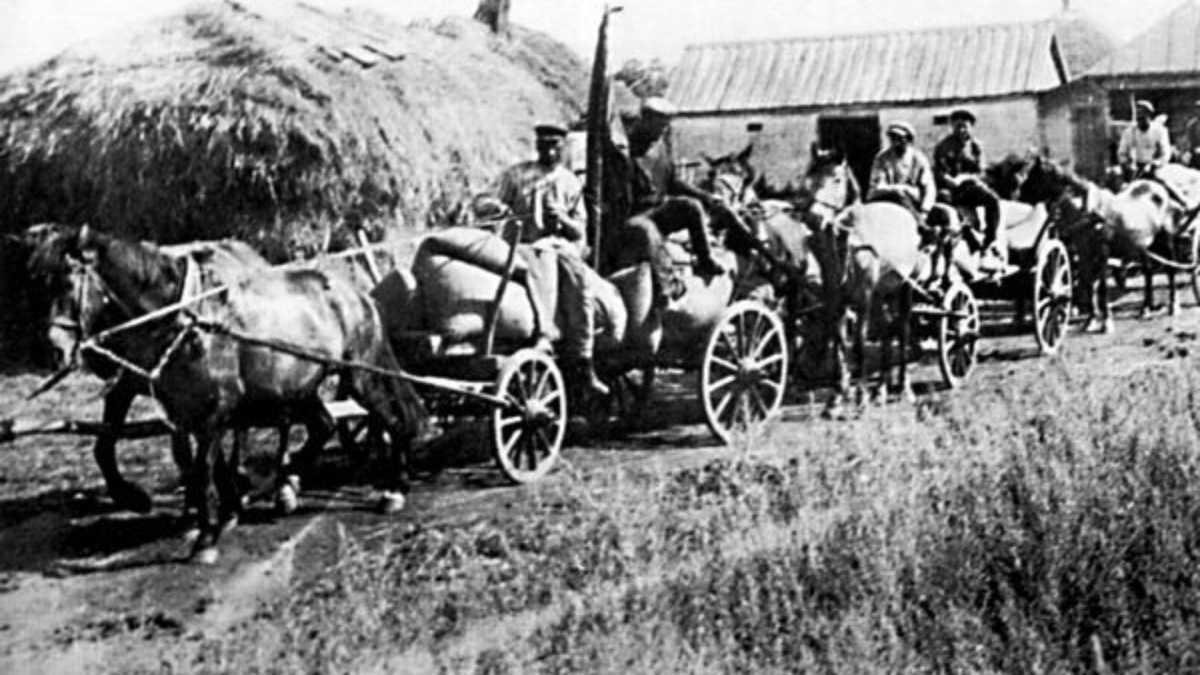 Departure of the red windrow with bread. Collective farm "Wave of the Proletarian Revolution", Kharkiv Region, 1932
In 1932, Ukraine was assigned an unrealistic plan for the procurement of 364 million poods of grain (1 pood is 16 kg). Local reports of the campaign's failure were received, but instead of correcting the plans, the center chose a different path - the search for "culprits".
The authorities began to accuse the peasants of sabotage, hiding grain, and even creating underground storage facilities. Against the background of this campaign, "Law 7.8" appeared - by the date of its adoption. It was immediately published in "Pravda", and a large-scale propaganda raid was launched across Ukraine. More than 100,000 agitators were supposed to "expose thefts", but the real results showed otherwise - the harvest simply perished in the fields, because the peasants did not want to work in the conditions of workdays [workday is a term associated with a form of payment for labor on collective farms in the USSR, introduced in 1930-31 during the forced collectivization of agriculture. Workdays were replaced by cash payments in 1966, - ed.].
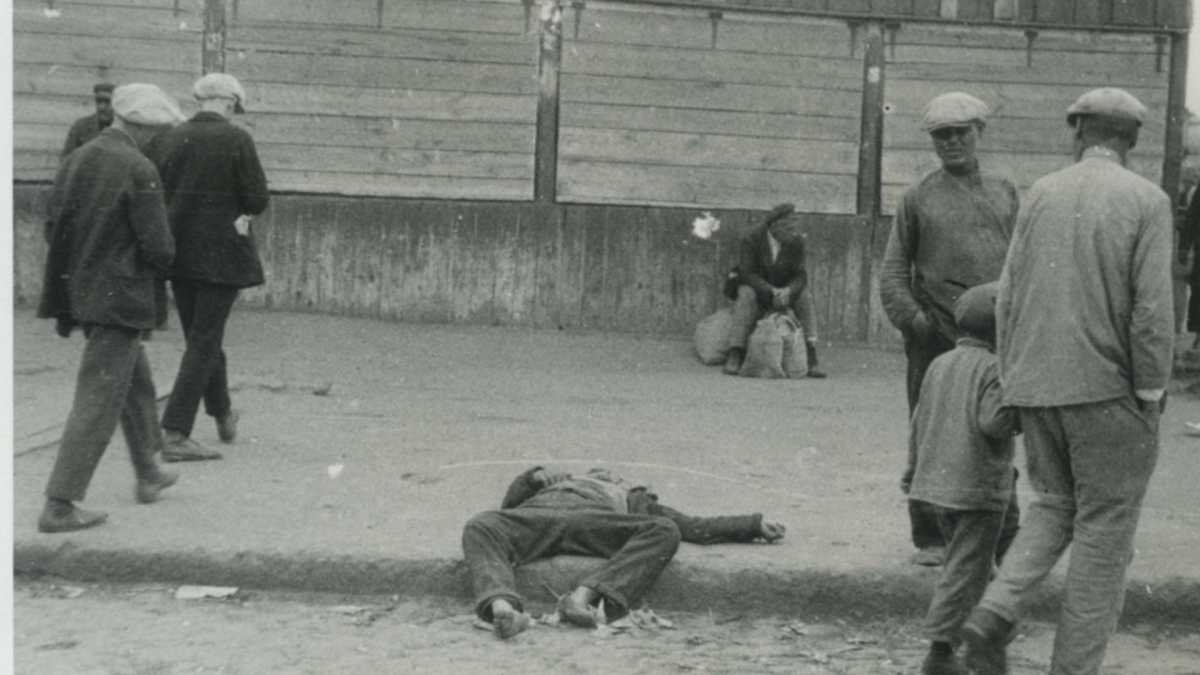 Death from hunger on streets of Kharkiv, 1933
The system of workdays meant that people received food only after the collective farm fulfilled state standards. The calculation was once a year. This meant complete dependence on the state, in fact - a new form of serfdom. The law only consolidated this mechanism: any "stealing" - even a few ears of grain from the field - was punished as a serious crime.
Hence the folk name. Five ears of grain - not a metaphor, but a real basis for accusation: a few grains hidden in a pocket could be worth a life. Cases were considered without the possibility of appeal, according to a simplified procedure, in a maximum of 15 days. Over 80% of those convicted under this law were poor peasants.
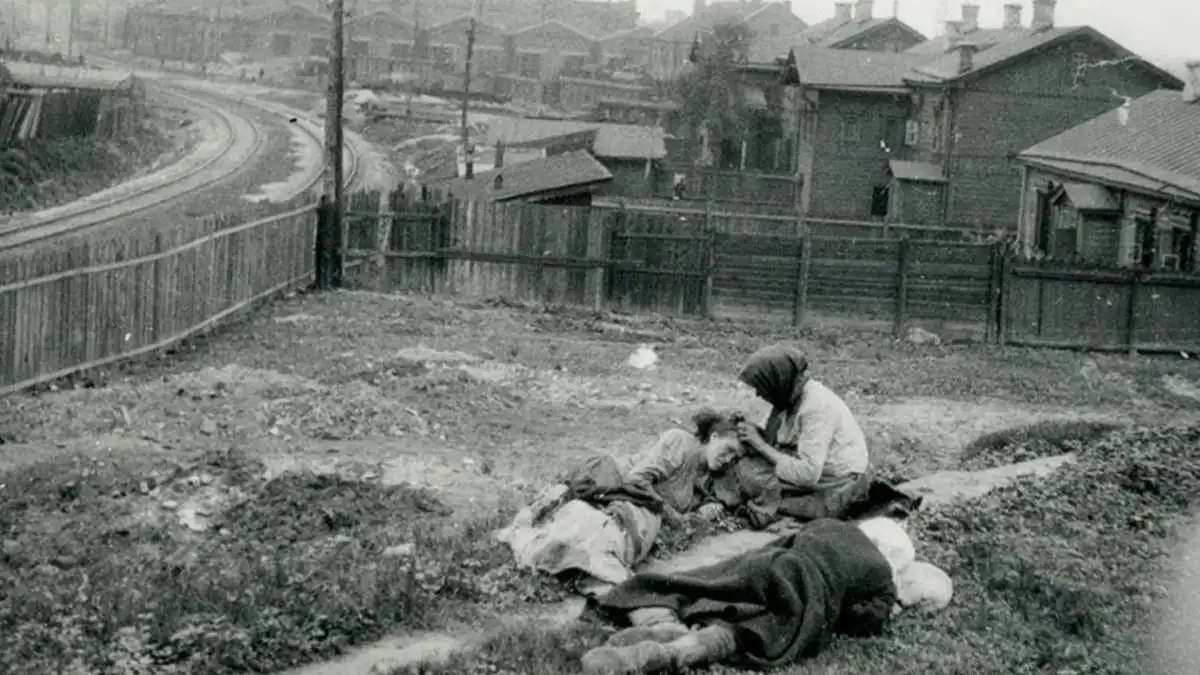 Victims of famine. Kharkiv Region, 1933. Photo from collection of Cardinal Theodor Innitzer
By mid-autumn 1932, it became clear that the law was not fulfilling its function: the plans remained failed, and the state was without grain. But instead of stopping, the repressions only intensified. In early 1933, a new decree allowed the seizure of not only grain, but all food from the peasants.
Thus, the law on the "protection of socialist property" became the legal basis for the Holodomor - the genocide of the Ukrainian people. Eyewitness accounts confirm that even the remnants of food were taken from the peasants, including legumes, potatoes, and dried berries. For many, this became a verdict.
Who we are: About us, Contacts. How we write news and our principles: Editorial code. We did our best. If you found this valuable – please support us.
To request a correction, please send an email.