
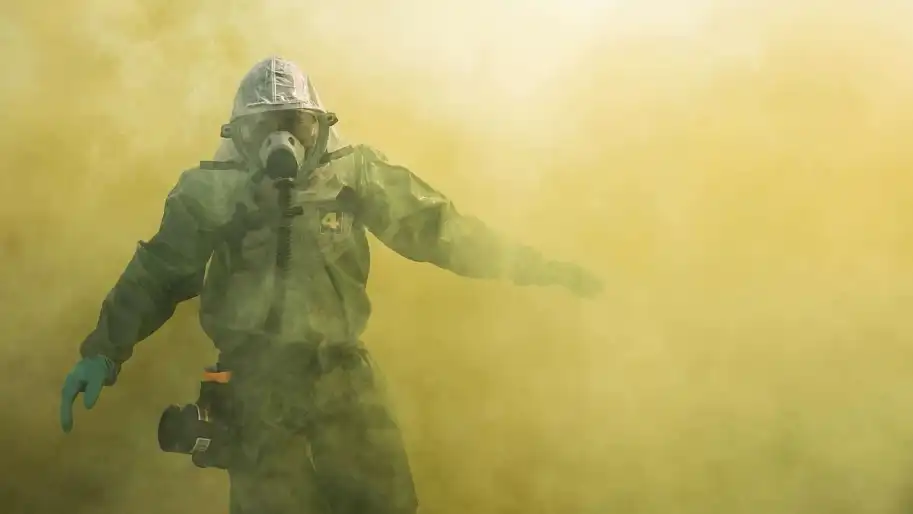

The Security Service of Ukraine (SSU) continues to document the massive use of banned chemical weapons by the russian occupation forces against the Defense Forces of Ukraine. These include, among other things, aerosol grenades "K-51", "RGR" and "RG-Vo", equipped with poisonous irritant substances - CS (chlorobenzylidene malonitrile) and CN (chloroacetophenone).
This was announced by the SSU, Ukrainian News Agency reports.
There are also frequent cases of the occupiers using ampoules with a poisonous substance - chloropicrin. The use of such means of warfare is prohibited by the Convention on the Prohibition of the Development, Production and Use of Chemical Weapons and on their Destruction of January 13, 1993.
According to the investigation, the largest number of chemical munitions is used by the russian occupation forces in the form of drops from FPV drones on the defensive positions of the Ukrainian defenders. After hitting the target, the poisonous compounds of the chemical charge affect the mucous membranes of the military, primarily their eyes and respiratory organs.
In this way, the enemy is trying to force the soldiers of the Defense Forces to come out of the trenches and dugouts under the aimed fire of the occupiers. The most cases of the use of such weapons by the aggressor were recorded on the eastern front, as well as during enemy strikes on the Nikopol district of the Dnipropetrovsk Region.
In order to document and hold the russians accountable for these crimes, the SSU not only investigates its own criminal proceedings, but also involves specialized international organizations in documenting these facts. In particular, in order to conduct the necessary laboratory tests and inform the international community, the SSU transferred part of the physical evidence through the Ministry of Foreign Affairs of Ukraine to the Organization for the Prohibition of Chemical Weapons (OPCW) in The Hague.
Based on the results of relevant studies, this international organization published three reports confirming the systematic use of chemical agents by the russian federation as a means of waging war against Ukraine.
As a result, the Council of the EU imposed sanctions on russian units that are part of the armed forces of the russian federation and are involved in the development and use of chemical weapons in our country. In particular, the EU restrictions have included the troops of radiation, chemical and biological protection of the aggressor country, as well as the 27th scientific center and the 33rd Central scientific research and testing institute of the Ministry of Defense of the russian federation, which are engaged in the development of prohibited chemical agents.
Within the framework of the multi-episode criminal proceedings initiated by the SSU investigators under Article 438 of the Criminal Code of Ukraine (war crimes), an investigation is underway to bring the military-political leadership of the aggressor state and all those involved to justice.
Among others, in December 2024, the SSU reported in absentia suspicion to russian general Igor Kirillov, the head of the radiation, chemical and biological protection (RCB) troops of the russian armed forces. According to counterintelligence and investigation data of the SSU, this official is responsible for the massive use of chemical weapons against Ukrainian troops.
The pre-trial investigation of the Security Service of Ukraine is ongoing, and comprehensive measures are being taken to bring every russian war criminal to justice.
As a reminder, the European Union's High Representative for Foreign Affairs, Kaja Kallas, stated that the aggressor country, russia, is increasingly using chemical weapons in Ukraine to inflict as much "pain and suffering" as possible and force Ukraine to surrender.
Who we are: About us, Contacts. How we write news and our principles: Editorial code. We did our best. If you found this valuable – please support us.
To request a correction, please send an email.