
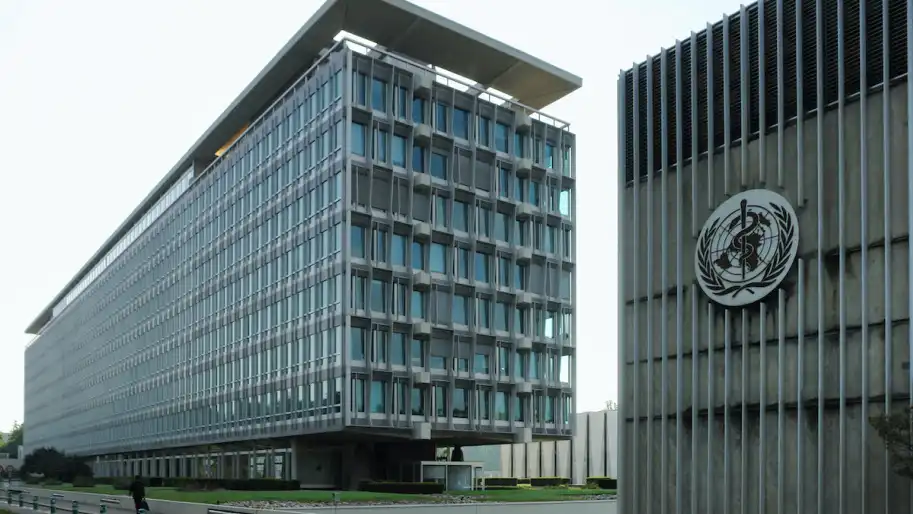

The Deputy Minister of Health of Ukraine in 2016-2019, Pavlo Kovtoniuk, criticized the WHO Regional Director for Europe, Hans Kluge, who recently traveled to moscow, where he met with russian Foreign Minister Sergei Lavrov, to resume the organization's cooperation with russia. Kovtoniuk emphasized that the WHO will take russian money for its activities and will again be a means of influence for moscow in the post-Soviet space.
The former deputy minister wrote about this in his blog on Censor.net.
Despite the fact that Kluge reminded Lavrov of "strict adherence to international humanitarian principles, including the obligation of all parties to refrain from attacks on medical facilities," Kovtoniuk recalled that the destruction of hospitals is a long-standing tactic of the russians in military conflicts.
During the war in Syria, russian troops carried out at least 236 attacks on hospitals. After their entry into the war on the side of the Bashar al-Assad regime in 2015, the number of destructions increased significantly, as new opportunities appeared to attack medical facilities from the air.
"At that time, public and volunteer organizations from around the world called for sanctions against the Syrian and Russian regimes, warning that evil cannot go unpunished. In response, international organizations, and first of all the WHO, only called on "all parties" to "unwaveringly" refrain from attacks," Kovtoniuk noted.
And on March 10, 2022, Lavrov was forced to comment on the russian bombing of a maternity hospital in Mariupol, Ukraine. The terrible crime could not be hidden, so the minister lied that there were no patients in the facility, but the Azov regiment was stationed there.
"These were the first days of the systematic destruction of Ukrainian medicine by the Russians. By the end of March, they had almost completely destroyed it in Mariupol: out of 106 places where medical care was provided, 82 were destroyed. At the same time, 5-6 attacks on hospitals took place throughout the country every day: in Kharkiv, Chernihiv, Sumy, Kyiv, Mykolaiv, Kherson, Zaporizhia and other cities. It was obvious that these were not isolated cases, but a deliberate tactic of war," emphasized Pavlo Kovtoniuk.
And despite more than 2,300 confirmed by the WHO itself, russian attacks on medical institutions in Ukraine, Director Hans Kluge does not shy away from renewing large-scale cooperation with Moscow.
"It was disgusting, but I was not surprised. The WHO's reaction to the war from the first day caused outrage. One of the member states - Russia - purposefully destroyed the medicine of another - Ukraine. The WHO, which declares its main principle to be the right of people to health, does nothing. At this time, Russia remained a full member of the WHO, had the right to vote, its office worked in Moscow, and the Minister of Health continued to be on the WHO Executive Board," wrote Kovtoniuk.
Hans Kluge came to moscow to negotiate financial support for russian initiatives by the WHO in Central Asia. As a result, according to the former Deputy Minister of the Ministry of Health of Ukraine, in exchange for money he helped the russian federation to emerge from international isolation, normalized russian terror against the health care system, and legitimized russian influence on the countries of Central Asia.
"I don't understand how we can continue full-fledged cooperation with the WHO. If we don't stop it altogether, we can lower the level. Suspend joint projects, not start new ones. Not hold joint events, boycott events. In addition, I can't imagine how we can host Hans Kluge himself in Ukraine. If we don't do this, we will show that we don't care whether Russia funds the WHO, as long as the WHO funds us. And most importantly, we will agree that war crimes against ourselves are normal," Pavlo Kovtoniuk concluded.
Who we are: About us, Contacts. How we write news and our principles: Editorial code. We did our best. If you found this valuable – please support us.
To request a correction, please send an email.