
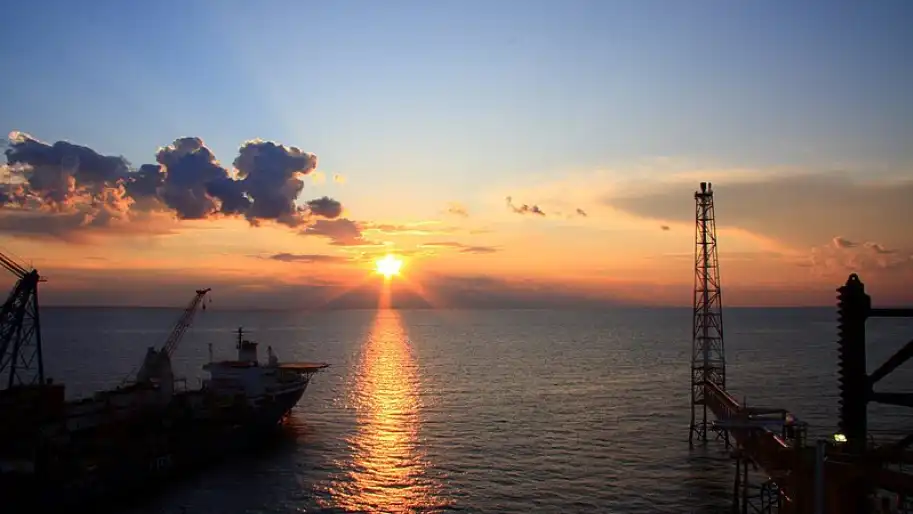

A major traffic jam has formed in the Persian Gulf, where nearly a thousand ships have been stuck since last week. Shipping in the Persian Gulf has slowed down due to the conflict between Israel and Iran, as GPS jams increase the risk of collisions, and escalating regional tensions are forcing shipping companies to limit transit to daytime hours, S&P Global reported.
The disruption is reportedly caused by widespread electronic interference affecting global positioning systems and communications services, forcing shipowners to restrict movement.
“There are concerns not only that the ships could be attacked, but also the immediate problem is how to get the recent cargo out of the Persian Gulf,” the source said, citing a tanker owner whose two loaded ships recently put to sea and another is under loading.
It also said that only the 4pm or 6pm window is currently being used for traffic instead of the usual 24 hours, which is causing the congestion.
The operational restriction has created unprecedented congestion on one of the world’s most important energy transit routes. The Strait of Hormuz connects the Persian Gulf to the Arabian Sea. About 20 million barrels per day of marine crude oil, condensate and refined fuels pass through the strait, as well as nearly 11 billion cubic feet per day of LNG.
Other market participants have also highlighted the problem of GPS jamming, which is causing serious disruptions in the Persian Gulf.
"Lack of communication is becoming more and more common. Many ships are not communicating," said the head of a shipping company that has encountered this problem.
According to the head, even if there is no direct attack on ships, collisions cannot be ruled out, since when GPS interference occurs, detecting other ships nearby becomes extremely difficult, and navigation is disrupted. The shore operations group of any ship should be in contact with the crew on board 24/7, but this is not currently the case, sources said. There is also an increased risk of damage to ships by sea mines, even if the Strait of Hormuz is not closed, sources said.
As Ukrainian News Agency earlier reported, Israel's war with Iran has become a "lifeline" for the russian budget, which is experiencing a sharp drop in oil export revenues.
Earlier, Trump gave up on the geographical front: he refused to rename the Persian Gulf after Iran protested.
Who we are: About us, Contacts. How we write news and our principles: Editorial code. We did our best. If you found this valuable – please support us.
To request a correction, please send an email.