
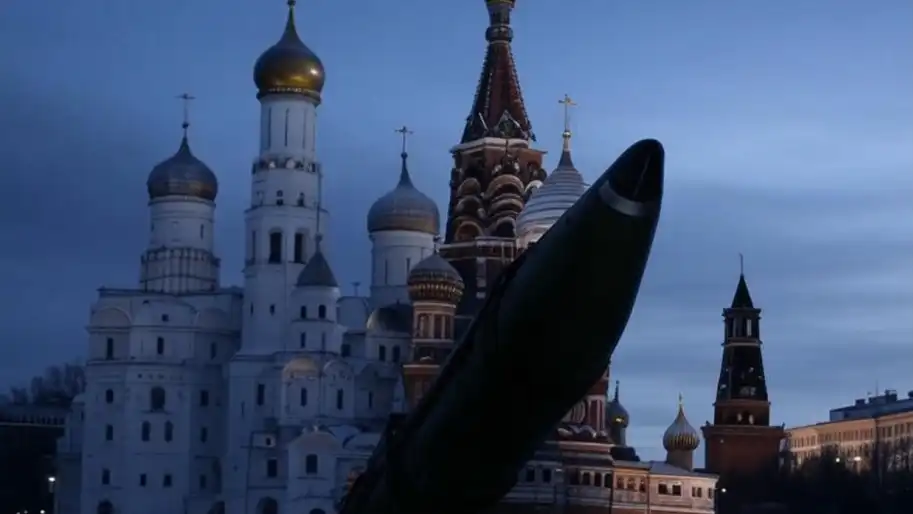

Russia has stepped up its nuclear rhetoric in response to US President Donald Trump's calls to strengthen European defense, using tactics of intimidation and disinformation similar to those that preceded the invasions of Georgia and Ukraine.
This is stated in a report by the Institute for the Study of War (ISW).
The document notes that the Kremlin is making baseless threats to NATO countries, trying to respond to US calls for the European Union to take greater responsibility for its own security.
The report quotes the words of the Secretary of the russian Security Council, Sergei Shoigu, who in an interview with TASS on April 24 stated that Europe had allegedly "been preparing for war with russia for three to five years" and was building up forces near the borders of russia and Belarus. He also said that the EU seeks to become a "military organization against russia" and complained about the increase in defense spending in Poland, Lithuania and Estonia.
In addition, Shoigu confirmed the deployment of russian Oreshnik missiles in Belarus and recalled the change in the russian nuclear doctrine in November 2024. According to the new provisions, russia allows itself to use nuclear or conventional weapons in the event of a threat of aggression against russia or Belarus.
ISW emphasized that such rhetoric by the Kremlin is an attempt to restrain NATO and exert information pressure on Western countries. Analysts recalled that similar threats from russia were made before the invasion of Georgia in 2008 and Ukraine in 2014 and 2022.
The report pays special attention to the comments of the Kremlin press secretary Dmitry Peskov. In an interview with Le Point, he denied russia’s aggressive intentions, while repeating the narrative of “discrimination against russian-speaking populations” in the Baltics, rhetoric that Moscow has previously used to justify military actions.
The ISW report also suggests that the Kremlin’s threatening rhetoric is part of a broader campaign of reflexive control:
“Peskov and Lavrov’s threats to Finland, Poland, Estonia, Latvia, and Lithuania echo those of other Kremlin officials, which is likely part of information preparation for possible russian attempts to expand its sphere of influence in Eastern Europe, the South Caucasus, and Central Asia,” the report says.
ISW also draws attention to the words of russian Foreign Minister Sergey Lavrov that "fascists" are allegedly "seizing territories that once belonged to the russian Empire or the USSR," as well as to the statements of putin's aide Nikolai Patrushev regarding Finland.
According to analysts, these statements indicate the Kremlin's readiness to use historical narratives to justify new acts of aggression.
The US "peace plan" and the russian reaction
The report also mentions that on the eve of the meeting in London on April 24, the Trump administration, together with its European partners, is discussing a possible plan to end the war in Ukraine. According to unofficial data, Washington has proposed a "seven-point plan" according to which:
- Ukraine recognizes Crimea and part of the occupied territories as russian;
- refuses to join NATO;
- in return, the US lifts sanctions against russia;
- the Kremlin "freezes" the war.
Against the backdrop of these negotiations, Moscow has intensified threatening rhetoric, in particular regarding nuclear weapons, in an attempt to put pressure on European countries.
Recall, Lavrov stated that the Kremlin is ready for an agreement with the US regarding Ukraine, but on one condition.
Who we are: About us, Contacts. How we write news and our principles: Editorial code. We did our best. If you found this valuable – please support us.
To request a correction, please send an email.