

It would seem that after the war began, Zakarpattia — one of the safest regions in Ukraine — should have experienced an economic boom. Yet, for some reason, only one factory is currently under construction: a wood-processing plant that will consume as much timber in a year as all local sawmills combined — over a million cubic meters. Meanwhile, under the guise of protecting nature, large investment projects like the construction of the are being blocked. According to environmental experts, the resort would actually put an end to uncontrolled logging in the region. Over twelve years of construction, only 430 hectares of forest would be cleared for lifts, slopes, and residential zones — and even then, this forest would later be restored. In contrast, local forestry companies are currently logging about 400 hectares per year on the same territory. The resort, in turn, would create around 40,000 jobs for local residents and contribute to the development of transport, education, and medical infrastructure, which today is in a state of neglect.
Six months ago, the Supreme Court of Cassation annulled the detailed development plans for the in Zakarpattia. If considered a precedent, this ruling will influence the urban planning policy at the regional level when developing detailed territorial plans for four mountainous regions of Ukraine — Lviv, Zakarpattia, Ivano-Frankivsk, and Chernivtsi — in accordance with the Law of Ukraine "On the Status of Mountain Settlements in Ukraine," which grants them the status of mountainous territories.
To find out what’s happening with the Svydovets project, our correspondent visited the Yasinyanska and Ust-Chorna communities, spoke with their leaders and local residents, who still hold out hope for the resort’s construction.
Problems in Rakhiv District Only Concern Its Residents
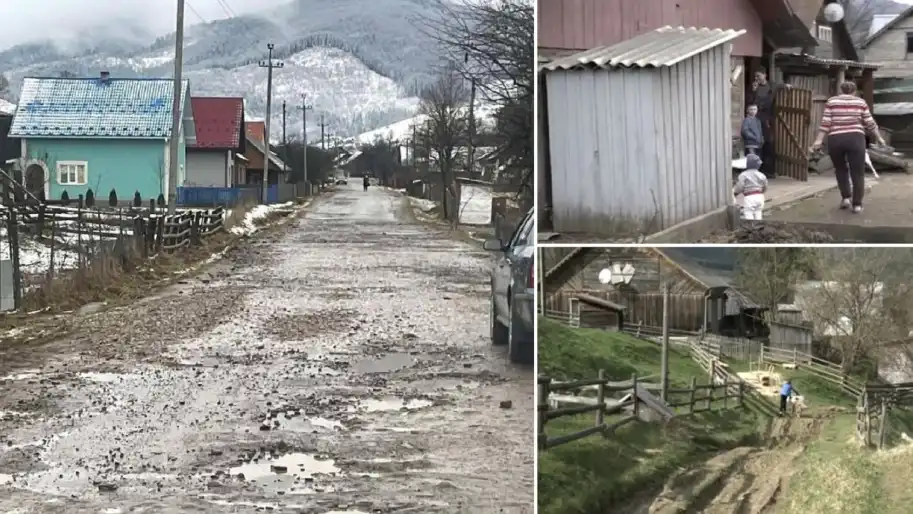
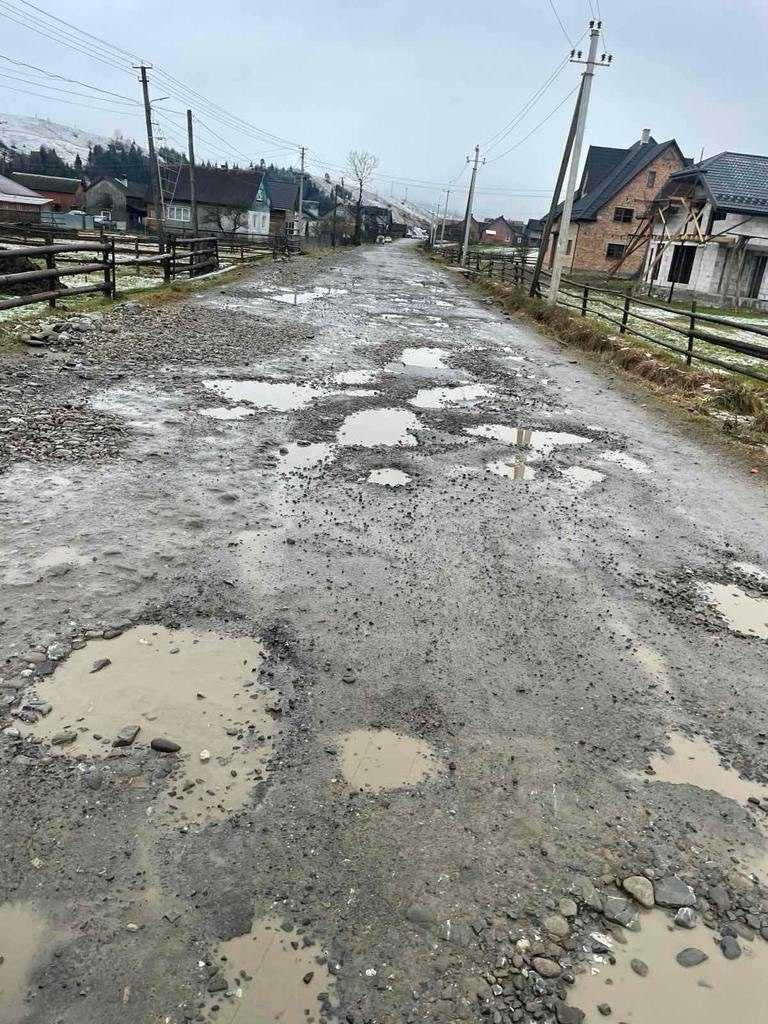
According to locals, there are almost no jobs in the Tyachiv, Yasinyanska, and Ust-Chorna communities of Zakarpattia, forcing people to go abroad for work. The war has only worsened the situation. Locals now place their last hope in tourism — but the region doesn’t even have proper roads to allow tourists to reach it, let alone other infrastructure. Residents of the village of Chorna Tysa even blocked the Yasynia–Chorna Tysa road, demanding its repair.
"There are over thirty protected sites of national and local significance within the Yasinyanska community. The community should receive land tax payments from the . To date, the reserve owes several million hryvnias. European regulations require compensation for settlements that host protected territories — but these regulations are not being followed. What’s worse, land is being taken from us without our consent. Meanwhile, we’re expected to fund social services, roads, school and hospital repairs on our own. How can we do this properly if we have no factories or large enterprises? Locals either work abroad or illegally cut down trees. There are no tourist attractions, and no market for sheep farming. Our local budgets receive minimal income, and since the war began, revenues have dropped by 79%. That’s why we held a public hearing and decided to jointly build a model ecological resort that, by our estimates, would generate millions in tax revenue, create about 40,000 jobs, and rebuild the transport infrastructure, which is currently in terrible condition," said Andriy Delyatynchuk, head of the Yasinyanska community.
The local government of Zakarpattia, particularly the communities of Rakhiv and Tyachiv, is pushing for the Svydovets project, as experts believe it could serve as a powerful engine for regional development. It would bring not only new roads and tax revenues to fund the renovation of schools and hospitals, but also long-awaited employment opportunities in a region that has long suffered from a lack of jobs.
"As a result of the project’s implementation, 5,000 jobs will be created for residents of the Rakhiv and Tyachiv districts, and 15,000 more in adjacent sectors. People in the region will be able to convert their private homes into guest accommodations, which will add thousands of beds with high year-round occupancy — creating another 10,000 jobs, as we saw in Ivano-Frankivsk region after opened. For example, the communities of Mykulychyn, Yablunytsia, Tatariv, Vorokhta, and Polianytsia saw the number of beds increase several times over the past 4–6 years, along with tax revenues. Annual revenues from land tax, resort fees, payroll taxes, corporate profit tax, and other levies linked to the resort’s operation will amount to tens of millions of hryvnias. These will become key budgetary resources not only for local communities, but for the entire region. I can see what’s happening in : the economy is growing, people have jobs. But our mountains are the same — and nothing is happening here. For comparison: Polianytsia has a 200 million UAH development budget, while Chorna Tysa’s is only 5–7 million. And is safe, there are no crime issues, families with children visit, walk around. So we studied ’s experience and want to create something similar here. If we want Zakarpattia to develop, we must unite around such projects," said Petro Kostyak, head of the Ust-Chorna community.
The planned project implementation period is 10–12 years. During the first two years, the focus will be on installing core engineering infrastructure and 70% of linear networks — roads, bridges, centralized water supply and sewage systems — ensuring that main infrastructure construction causes no undue harm to the environment or pollution of air and water resources.
Experts say the resort will not worsen the environmental situation — on the contrary, it will solve current problems, such as the absence of wastewater treatment facilities. The future resort zone includes the villages of Lazeshchyna, Chorna Tysa, and the town of Yasynia. None of these currently have treatment plants, and sewage ends up in local rivers. According to the environmental impact assessment commissioned by the Zakarpattia Regional State Administration, the investor is required to build treatment facilities. Since they will be located downstream from Yasynia, these facilities will treat all wastewater — from the resort and from the three surrounding settlements. If the planned parameters are implemented and development prospects are considered, the Tysa River will become significantly cleaner," said Lyudmyla Arkhipova, Doctor of Technical Sciences in Environmental Safety and professor at the .
Another pressing issue is the absence of flood protection structures in the Carpathian region, which leads to frequent flooding. Although appropriate state programs exist, the government lacks funds — making investor-funded dam construction and bank reinforcement the most promising solution.
"The pen-and-sawmill alliance"
The local government had planned to begin construction back in 2016, but it was repeatedly blocked in court by local logging entrepreneurs, with the media support of environmental activists. The legal battle dragged on for more than eight years. In October 2024, the Supreme Court of Cassation ultimately annulled the detailed plans for the .
According to the community’s lawyer, the plaintiffs in the case were owners of local sawmills who have been logging Zakarpattia’s forests for years and saw the resort’s construction as a threat to their business.
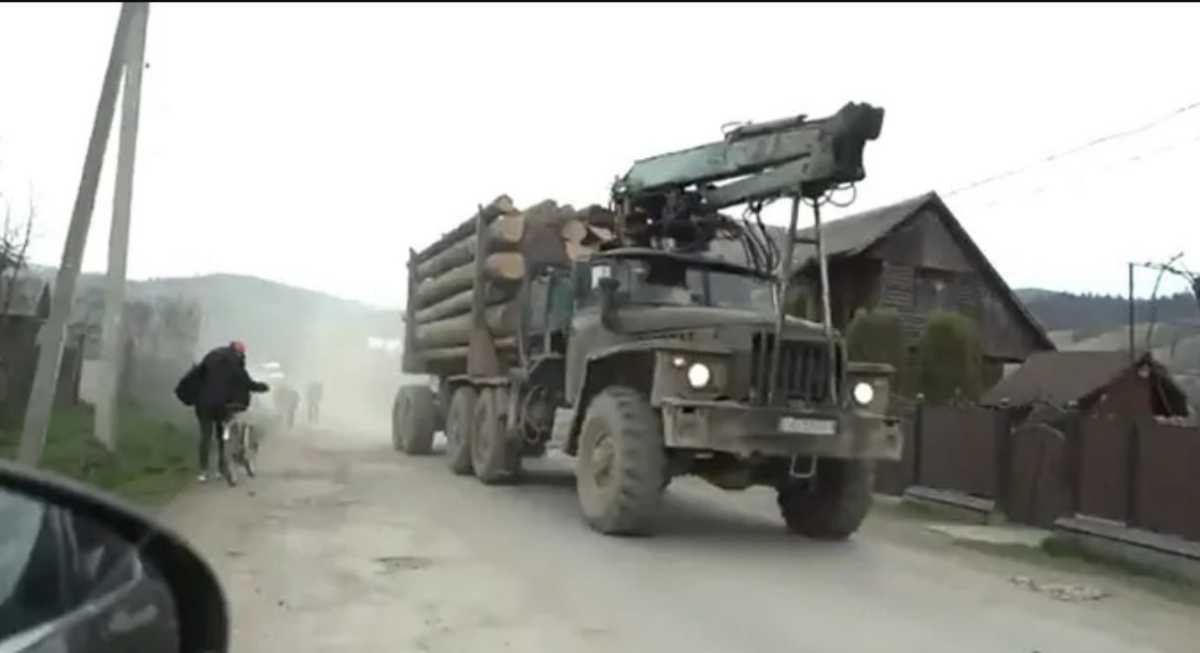
"The absurdity is that these timber company owners have been profiting from deforestation for over 20 years. Now they are claiming — with the support of environmental activists — that the resort will destroy the Carpathians. But their outrage usually appears only on social media or in the press. When it comes to roundtables or public hearings, they are nowhere to be found," said attorney Yaroslava Ivanova.
Case materials from №807/1314/17 show that the lawsuit against the Zakarpattia Regional Administrative Court was filed in 2017 by three residents of the village of Lopukhiv: Vasyl Vasylovych Fabrytsii, founder of LLC Lisy Lopukhova (a logging and planing company); Valeriy Yosypovych Pavlyuk, a member of the local council; and Mykhailo Mykhailovych Soima, who, according to public records, also owns a sawmill. The — frequently referenced by activists — is listed only as a third party without independent claims in the case.
Despite this, environmental arguments remain the main strategy of the resort’s opponents. In 2024, the (BMF), a non-governmental organization based in Basel, Switzerland, along with the European cooperative Longo Maï and Ukraine’s Free Svydovets initiative, published a report titled "The Great Land Grab: How Oligarchs Are Seizing Europe’s Last Wilderness During Wartime." The report accused Ihor Kolomoiskyi of trying to develop the Ukrainian Carpathians.
However, as the heads of the Yasinyanska and Ust-Chorna communities point out, no investor has yet been found for the resort — which would require at least €2 billion. The entire process has stalled at the stage of preparing detailed territorial plans, initiated and commissioned by the communities themselves.
"That report is purely manipulative. They invoked Kolomoiskyi’s name for sensationalism and chose a deliberately scandalous headline. Are we really to believe that Svydovets is the last wild land in Europe being seized by oligarchs? The report doesn’t mention any other territory — even though another resort is already being built in the Carpathians of Lviv region. Meanwhile, we don’t even have a presentable project to show investors — and they’re already linking us to Kolomoiskyi," said Andriy Delyatynchuk.
The environmental organizations’ report claims that the resort’s construction "will worsen or destroy 1,270 hectares of forest, having a serious long-term impact on flora, fauna, and habitats." However, Zakarpattia-based ecologists say the report is not a professional environmental impact assessment (EIA), which in fact states that more forest will be preserved than cut.
"Highly qualified scientists from different fields worked on the environmental impact report. They studied every corner of the area, surveyed all potentially hazardous zones, and analyzed risks such as landslides and floods. They also developed detailed mitigation strategies for future investors, all aimed at preserving the region’s unique nature. There are no plans to develop the Svydovets massif itself. No one would invest billions only to destroy the natural assets they hope to attract tourists with. Investors are interested in improving what already exists — making it even better. They want visitors to come, relax, enjoy the scenery, and spend money. After decades of studying the geology, hydrology, geochemistry, and landscapes of Zakarpattia, I can confidently say: the investment project is well-founded and rational. Opposition from environmental activists is biased and does not support the economic growth of the mountain region," said Stepan Pop, head of the Department of Physical Geography and Environmental Management at.
Local residents still hold out hope for the resort’s construction, while community leaders seek ways to help their impoverished villages survive. Meanwhile, in the neighboring Lviv region, the OKKO company has already spent a year building a large new resort in the Carpathians — yet there hasn’t been a single public statement from environmental activists about it, either in the media or on social networks.
Who we are: About us, Contacts. How we write news and our principles: Editorial code. We did our best. If you found this valuable – please support us.
To request a correction, please send an email.