
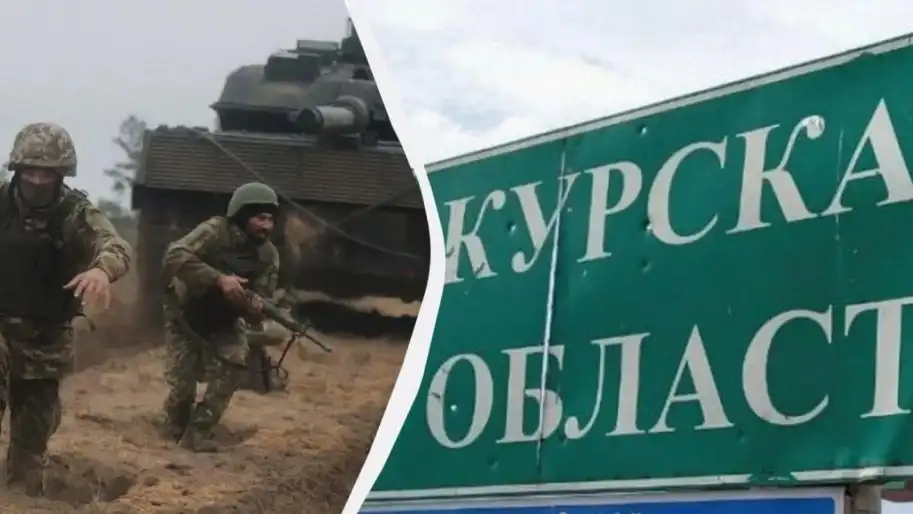

If Ukraine loses control of captured part of the Kursk Oblast, russia will launch a large-scale offensive and could seize more territory, including the Sumy Region, which borders the Kursk Oblast, The Washington Post reports.
The situation near Kursk demonstrates the escalation of tensions between russia and Ukraine, which are intensifying ahead of Donald Trump’s inauguration. The conflict in the region has become an important part of a broader struggle, with both sides seeking to improve their positions ahead of possible peace talks.
Ukrainian forces launched a counterattack in the region last weekend, trying to regain some of the territory they first captured last summer and then lost. But almost a week into the new operation near Kursk, no progress appears to have been made. Instead, russia has also gone on the offensive.
“These were difficult days. The russians attacked from different directions at the same time. Some of them succeeded. … They crossed the border with Ukraine at several points, but we managed to retake the positions,” said a Ukrainian military officer in the region, speaking about the early days of the counterattack on condition of anonymity because of the sensitivity of the operation.
Ukraine’s continued focus on Kursk indicates how important it is for Kyiv to hold the area, especially given that Trump’s upcoming arrival could increase pressure on both sides to come to the negotiating table, the publication writes.
“Ukrainian officials also warned that if their troops retreat across the border, 60,000 troops that Kyiv says russia has deployed will follow them into Ukraine and seize more territory,” the publication said.
For Ukraine, Kursk is a symbol of its ability to counterattack, as it was here that it made its only significant advance in the past year. This territory is important both militarily and politically: its loss would weaken Ukraine’s position in any diplomatic initiatives.
The Ukrainian military is trying to hold the region, despite significant pressure from russian forces. Counterattacks have helped to stabilize the situation somewhat, but russia’s dominance in resources and numbers makes this task more difficult.
Russia, for its part, is using all available means to retake the region, including the involvement of North Korean troops. Their “cannon fodder wave” tactics consist of massive assaults, often without taking into account casualties, which creates new challenges for Ukrainian defense. These troops operate differently than russian units, continuing the offensive even in the face of significant losses.
The involvement of North Koreans allows russia to preserve its own manpower for other operations, while at the same time it indicates difficulties in manning russian units.
"It seems that the North Korean soldiers operate with a completely different mindset and approach than the russian troops. They are very fresh. When the russians storm our positions and suffer losses, they retreat. But the North Koreans just keep moving forward," said Oleh, a soldier from the 8th Special Operations Regiment.
The political context of the operation is no less important. The expectation of Trump's inauguration creates additional pressure on both sides. Ukraine seeks to demonstrate its strength in order to secure support in the conditions of international dialogue. Russia, having the advantage, is less interested in rapid change and can use this situation to further strengthen its positions.
However, the involvement of the North Korean military also creates certain problems for russia. Misunderstandings between different units and difficulties in communication allow Ukrainian troops to conduct pinpoint counterattacks. Despite this, massive strikes by russian forces continue to create serious pressure on Ukrainian positions.
Who we are: About us, Contacts. How we write news and our principles: Editorial code. We did our best. If you found this valuable – please support us.
To request a correction, please send an email.