
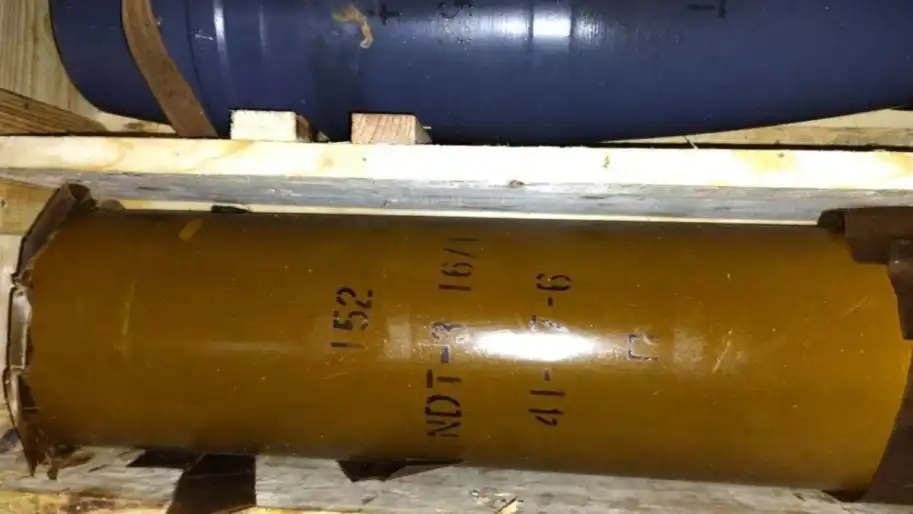

The National Intelligence Service of the Republic of Korea (NIS) reported that it is studying information about the possible supply to the terrorist country of russia of half-century-old North Korean artillery shells.
The quality of the ammunition with which Kim Jong-un supplies vladimir putin's army is poor: so, about half of the North Korean missiles that the russian armed forces used in Ukraine exploded in the air.
The NIS statement came amid recent South Korean media reports that 122mm projectiles manufactured in the North in the 1970s were among the ammunition used by russia in the war, Yonhap News said.
"The NIS is studying the relevant circumstances in detail and continues to monitor military cooperation between North Korea and russia in general," the service said in a statement.
According to South Korean Defense Minister Shin Won-sik, after the meeting between putin and Kim in September of last year, North Korea sent about 6,700 containers to russia, which can accommodate approximately 3 million shells. Pavlo Luzin, an expert on the russian army and military-industrial complex, believes that there were much fewer shells.
Due to safety requirements, no container goes with a full load (30% is already a lot), and in the trains (they used to deliver shells from the Far East to the front) there are many empty cars, which are used for cover and fire protection, he said in his March report.
North Korea has been stockpiling shells all the time since the end of the war with the South in 1953, "in many respects this is a huge mass of shells with an expired shelf life, they are not very safe to use," Luzin said.
The situation is similar with North Korean ballistic missiles, which, according to the April report of UN experts, russia used to shell Kharkiv. The Ukrainian prosecutor's office reported in March that the russian army fired about 50 North Korean missiles at six regions. Prosecutors examined the wreckage of twenty-one and told Reuters the other day how many of them failed.
"About half of the North Korean missiles went off the programmed trajectory and exploded in the air; in these cases, their fragments were not found," said the Prosecutor General of Ukraine, Andrii Kostin.
Who we are: About us, Contacts. How we write news and our principles: Editorial code. We did our best. If you found this valuable – please support us.
To request a correction, please send an email.