
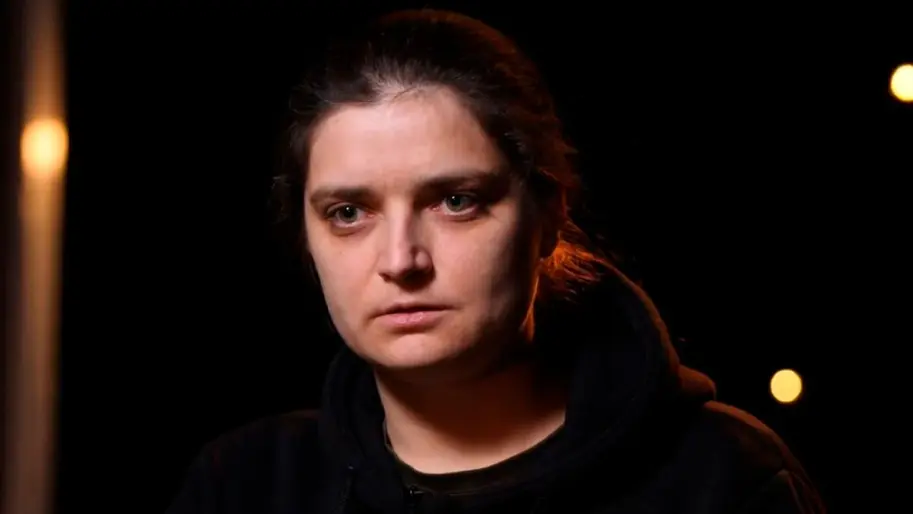

Social activist, founder of the Victory Drones project
Born on May 19, 1988, in Kamianets-Podilskyi (Khmelnytskyi Oblast, Ukrainian SSR).
Education
In 2005, Berlinska was expelled from the History Department of the Ivan Ohienko Kamianets-Podilskyi National University due to academic failure. However, she returned to her studies in 2009 and studied in the correspondence division of that department until 2013.
In 2011, she also enrolled in the full-time program of the Faculty of Correctional and Social Pedagogy and Psychology at KPNU.
In 2013, she enrolled in the master’s program in Jewish Studies at the Kyiv-Mohyla Academy, but dropped out in September 2014. Despite this, in 2015, Maria defended her thesis and was one of four speakers at the graduation ceremony at the National University of Kyiv-Mohyla Academy, alongside Ukrainian President Petro Poroshenko.
Career
Starting in 2026, Berlinska worked at one of the local newspapers in Kamianets-Podilskyi.
During the Euromaidan, she was a member of the O. Kobylianska Women’s Hundred.
In 2014, as a student, Berlinska joined the ranks of the "Aidar" battalion. In an interview with the publication "Ukrainian Week," she noted that she had no experience but wanted to be involved.
"Before the war, I wasn’t interested in aviation or drones. In the summer of 2014, I saw what was happening and realized I needed to do something, to take an active part in it. Not just on Facebook, not just in Kyiv. The decision wasn’t easy. I didn’t want to die, and returning from the front as a disabled person seemed like an even worse option. But I realized that I couldn’t do anything else,” Berlinska said at the time.
According to reports from Berlinska herself and representatives of the Aidar Battalion, after several days of training, Maria began participating in combat operations—she was responsible for aerial reconnaissance. At the same time, the publication "Persona" claims that "[Berlinska] spent several weeks in the Aidar battalion, after which she returned to Kyiv."
In October 2014, Maria began conducting training sessions for aerial reconnaissance personnel destined for the front lines. And in January 2015, she established the Aerial Reconnaissance Support Center.
Since 2016, Berlinska has been collaborating with Western grant donors. Berlinska heads the NGO “Institute for Gender Programs,” established in 2016 as the institutionalization of the civic project “Invisible Battalion.” Its goal is to protect women’s rights, achieve gender equality, and promote democratic values in Ukraine, as well as to strengthen women’s positions in the security and defense sector and in society. The movement aims to implement the experience of the world’s strongest armies in the field of gender equality and non-discrimination in the security and defense sector. It is worth noting that the NGO’s Facebook page contains only four posts, the last of which is dated October 25, 2019.
After beginning to collaborate with donors, Berlinska began to appear frequently in the media.
Berlinska also became the author and producer of the film “The Invisible Battalion,” filmed with support from USAID.
In 2018, Berlinska proposed the idea of creating a Women’s Veterans Movement. In 2019, at one of the founding congresses in Kramatorsk, members of the movement initiated the practice of planting “Avenues of Remembrance” to honor the memory of women who died in eastern Ukraine during the Russian-Ukrainian war, and, in collaboration with the Ukrainian Institute of National Remembrance, released a five-part documentary series dedicated to women who died in the war. As of 2026, the movement continues to operate.
On February 24, 2022, Berlinska was in the United States. After the start of Russia’s full-scale invasion of Ukraine, she began collaborating with the “Come Back Alive” Foundation.
That same year, Maria Berlinska founded the Victory Drones project, which operates under the Dignitas Charitable Foundation. The project’s mission is to train operators and developers of tactical-level UAVs.
In 2023, she became a co-founder of the Dignitas Foundation for Technological Assistance to the Army. The project itself became part of the Dignitas Charitable Foundation.
In March 2023, the Dignitas team, led by Lyuba Shipovich and Maria Berlinska, launched the “Fierce Birds” strike drone support program, which raises millions of hryvnias in donations for drones through business partnerships.
Scandals
On August 9, 2023, the Russians launched a missile strike on the center of Chernihiv. One of the missiles hit the Drama Theater, where the DemoDay drone exhibition was taking place at that moment. The exhibition was to be attended by Ukrainian drone manufacturers, representatives of flight schools, and military personnel who use drones on the front lines. One of the event’s organizers was volunteer Maria Berlinska. The city council stated at the time that they had not approved the event, while the Regional State Administration noted that they had only received a letter from the organizers informing them of plans for a potential event.
Seven people were killed in the enemy attack, including a six-year-old girl. More than 150 people were injured. Berlinska was subsequently accused of recklessness and publicly announcing a specific event for the sake of personal publicity, which likely served as a tip-off for the enemy forces.
In May 2025, Maria Berlinska published a document containing data on Ukrainian UAV manufacturers. Russian occupiers “thanked” her for publishing this information in their media and Telegram channels. Among those who criticized the activist for this move was former Azov Chief of Staff Krotevich.
Also in 2025, Berlinska sparked outrage on social media with a statement that Ukrainians should prepare “for the mobilization of women and 18-year-olds.” Social media users noted that such calls are surprising coming from someone who is not on the front lines.
In April 2026, new transcripts of the so-called “Mindich tapes” allegedly contained conversations regarding the funding of volunteer Maria Berlinska and her influence on defense procurement.
These are alleged conversations between a person with a voice resembling Mindich’s and then-Defense Minister Rustem Umerov and the head of the Defense Procurement Agency, Arsen Zhumadilov. The conversations center on the issue of funding for Maria Berlinska and influence over the procurement of body armor for the Ukrainian army. According to the transcripts, the conversation includes a reference to whether Berlinska is “being paid a salary,” as well as a mention of the number “20,” which some commentators interpret as possibly 20,000 dollars. The recordings also allegedly discuss the need to hire another person and issues related to the supply of body armor to the Defense Forces. Berlinska called this an information attack and denied any unofficial payments.
Following the release of the “tapes,” war veteran and civic activist Oleg Symoroz stated that the appearance of Maria Berlinska’s name in the context of the so-called “Mindichgate” came as no surprise to him. After all, in his opinion, Berlinska has long demonstrated loyalty to the Office of the President, particularly to Oleg Tatarov, and also has clearly close ties with government officials. He also emphasized that the logic behind state funding of charitable foundations seems strange, as this could turn into a system of opaque financing through state resources.