
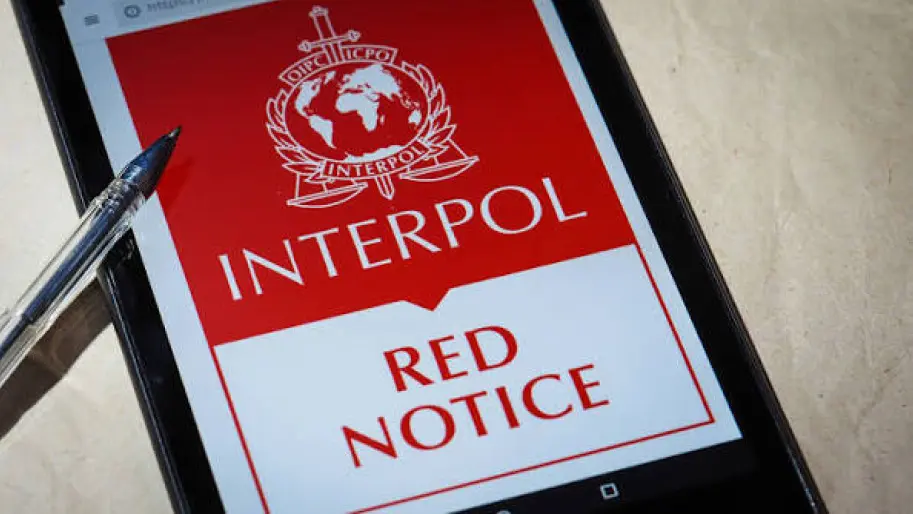

At the end of 2026, the international legal community will witness an event whose significance cannot be overstated. At the 94th session of the INTERPOL General Assembly, to be held in Hong Kong from November 30 to December 3, 2026, the entire membership of the Commission for the Control of INTERPOL’s Files (CCF) will be re-elected. The terms of all seven current members of the Commission expire on March 11, 2027, and thus, for the first time in many years, this body—which serves as the sole mechanism for individuals to seek legal protection against abuses of INTERPOL’s channels—will be renewed simultaneously and in its entirety.
Why do these elections matter?
The Commission is an independent body tasked with ensuring that the processing of personal data within the INTERPOL system complies with the Organization’s rules. The Commission consists of two chambers: the Supervisory and Advisory Chamber (three members), which exercises internal oversight over data processing, and the Enquiries Chamber (five members), which reviews requests from individuals for access to, correction of, or deletion of their data.
It is the Complaints Chamber that decides the fate of contested “Red Notices,” and therefore is of the greatest practical interest to attorneys working in the field of extradition defense and cross-border criminal proceedings.
Newly elected members of the Commission will serve five-year terms, while those re-elected from among the current members will serve three-year terms. The simultaneous renewal of the entire membership is a result of a pandemic-induced shift in the electoral cycle, which, as Interpol acknowledges, it will seek to avoid in the future.
Candidates and the New Procedure
At its 229th session (June 24–25, 2026), the Interpol Executive Committee deemed the candidacies of twenty candidates admissible, and for the first time in the Organization’s history, the full list of candidates was published on the official website. This step represents a significant increase in transparency. Five of the twenty candidates are current members of the Commission, including its Chair, Teresa McHenry (United States), under whose leadership—according to independent observers—the quality of decisions and the effectiveness of the CCF have increased significantly.
Among the candidates are two representatives from Ukraine: Vitaliy Kasap and Tetiana Ustymenko. Given the rule that no country may have more than one of its citizens serving on the Commission, the election of even one of the Ukrainian candidates would represent a significant institutional achievement.
It is also noteworthy that none of the eligible candidates are from countries subject to corrective measures by Interpol.
Discussion in Professional Circles
On July 24, 2026, the American Bar Association (ABA) held a panel discussion titled “INTERPOL’s Redress Mechanism: Latest Trends, Reforms, and Jurisprudence,” featuring Teresa McHenry, Chair of the INTERPOL Records Review Commission; INTERPOL’s Director of Legal Affairs; Yaron Gottlieb, Head of the Notification and Dissemination Task Force (NDTF), Yaron Gotlib, and a number of leading legal experts, among whom I had the honor of participating.
The discussion, with the direct participation of officials from the Commission and the General Secretariat, highlighted the pressing issues that the newly elected Commission will have to address from the very first day of its mandate.
It should be noted that on March 26, 2026, an online portal for submitting requests went live. According to Ms. McHenry, the weekly number of requests has risen to an average of 125, compared to 85 last year; if this trend continues, it will result in five to six thousand requests in 2026. At the same time, the Commission openly acknowledges the problem of backlogged cases. Specifically, according to the 2024 report, 30% of requests for data deletion were not completed within nine months. Improvements in processing times are expected for access requests, but not for deletion requests.
Meticulous work is currently underway to revise the Commission’s Statute. Following the 93rd session of the General Assembly in November 2025, a number of amendments were made to the Statute: the Commission’s subject-matter jurisdiction was clarified, its access to bilateral communications between national central bureaus was restricted (Article 19), and a priority rule was introduced (Article 33), under which the Commission does not make a decision on the merits until the General Secretariat has completed its own review of the request to publish a notice.
In practice, this has mixed consequences. Some of the new provisions may limit the Commission’s ability to provide expedited protection, while in a number of scenarios, applicants will receive a response more quickly. Until August 16, 2026, the Data Processing Committee (CPD) is collecting proposals from the professional community on harmonizing the confidentiality regime (Article 35) with the requirement for decisions to be reasoned (Article 38).
Some alarming trends have also been identified. In 2025, the number of published “red notices” rose from approximately 15,500 to 19,500, while the total number of active notices reached 86,000. Practitioners were particularly concerned by the sixfold increase in “blue diffusions” (from about 2,500 to 16,000) and the fact that about 78% of refusals are classified under the opaque category of “other reasons.” An Interpol representative attributed the surge to the batch submission of accumulated data, the expansion of the circle of user states, and reciprocity requirements in the national legislation of certain countries, promising to provide more detailed statistics on rejections.
There is also a shift in the geography and typology of abuses. Alongside “classic” violators, such as the People’s Republic of China (persecution of successful entrepreneurs with the aim of expropriating assets for the benefit of the state) and the Russian Federation (criminalization of private contractors in the context of war and the “import substitution” program, denial of access to criminal case files), new alarming trends are emerging, for example, regarding Brazil.
Unfortunately, the issue I raised regarding the proper procedure for submitting and reviewing requests for preventive measures and blocking access to an existing file—which arose in connection with the new procedure for submitting requests via the online portal—remains unresolved.
It is encouraging that the Commission and the General Secretariat have confirmed an approach whereby the standards of Article 2 of the Interpol Constitution, in the spirit of the Universal Declaration of Human Rights, the International Covenant on Civil and Political Rights, and other universal instruments, apply to all member states regardless of whether they have ratified the relevant treaties.
* * *
Thus, the key conclusion of the July discussion organized by the ABA is that no reform of the Constitution will succeed without qualified, integrity-driven, and independent members of the Commission.
The elections in Hong Kong will determine whether the CCF will retain its de facto independence, both in theory and in practice.
Who we are: About us, Contacts. How we write news and our principles: Editorial code. We did our best. If you found this valuable – please support us.
To request a correction, please send an email.