
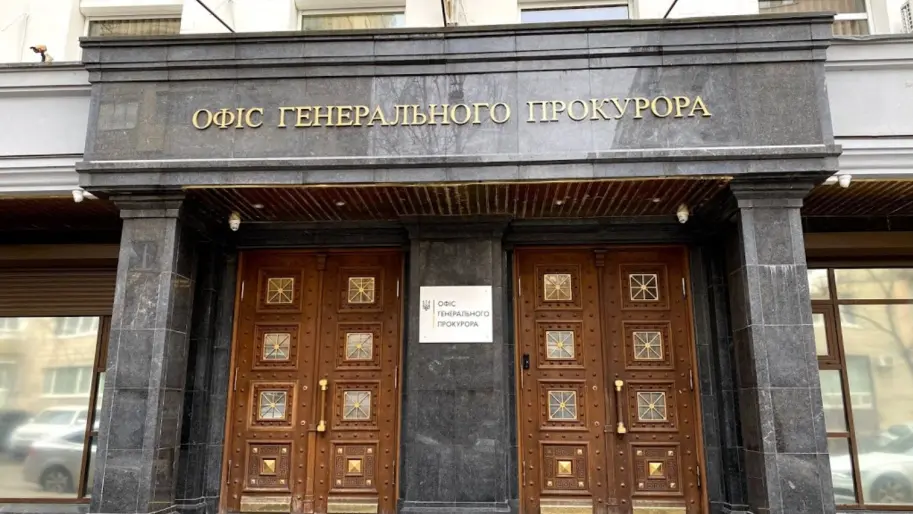

I'm going to tell you about a real bombshell in the world of Ukrainian finance. The co-owners of the 'Investment Capital Ukraine' (ICU) group – Makar Paseniuk, Konstantin Stetsenko and Valeriia Gontareva – are implicated in an investigation by the Office of the Prosecutor General and the State Bureau of Investigations (SBI). Law enforcement agencies are examining the financiers' possible involvement in treason, whilst Gontareva is mentioned in a case concerning possible abuse of office.
It is important to note that, as yet, none of them have been formally notified of any suspicion. In other words, the case has so far been opened on the basis of the facts alone. The involvement of ICUrepresentatives remains, for the time being, a working theory of the investigation. Nevertheless, in the court's view, the case is sufficiently 'substantial'. It cannot be ruled out that, once international requests have been fulfilled, formal charges may be brought.
A few facts. Case No. 62025000000000954 was opened on 23 September 2025. The investigation team is surprisingly large. Instead of the usual 1–2 investigators, it comprises 13 SBI officers and 5 prosecutors at various levels, including senior prosecutors from different departments, which may be taken as an indication of a serious case.
Official documents mention Paseniuk, Stetsenko, Gontareva and numerous companies in Ukraine, Cyprus and the British Virgin Islands (BVI), which form part of the 'Investment Capital Ukraine' (ICU) group. For example, these include the well-known ICU Trading, ICU Holdings, ICU Investment Management, CIS Opportunities Fund and Avangard Bank JSC (more than a dozen entities in total). Investigators are examining their possible involvement in financial dealings with representatives of the Russian Federation, as well as in the abuse of power for personal gain.
A brief chronology is as follows. The case was opened in September 2025. On 11 and 12 December, the Pecherskyi Court issued two rulings – one minor and one major. They follow the same pattern but relate to slightly different incidents. In particular, a seizure order has been imposed on certain ICU assets, which have been recognised as material evidence in the case.
On the basis of these court rulings, on 8–9 January 2026, the case extended beyond Ukraine's borders. The Office of the Prosecutor General sent official requests for international legal assistance to the law enforcement agencies of the Netherlands, Cyprus and the British Virgin Islands.
In these requests, the prosecutors asked for the companies' financial statements and other necessary data to be provided to Ukraine, whilst also requesting that their foreign counterparts maintain confidentiality. Among other things, the Office of the Prosecutor General assured that the case was not politically motivated. This is an important point, as the defence always exploits the theme of political persecution to block international investigations.
These requests for international legal assistance are by no means coincidental. This is not the first time I have spoken about the activities of modern financial groups which successfully evade criminal prosecution by operating across several jurisdictions simultaneously. The courts of one country are often not authorised to rule on incidents that took place in another country. I am convinced that ICU makes masterful use of these mechanisms. Operating simultaneously through the UK, Switzerland, Cyprus and the BVI has, for many years, reliably concealed the group's dealings with its clients. Perhaps this is why the position of the Office of the Prosecutor General was crystal clear: the prosecution service considered it essential to obtain information from other countries in order to conduct a full investigation into the criminal case.
LPN BONDS
There is another important aspect to the request addressed specifically to the Dutch authorities. Following a request from the Office of the Prosecutor General, in December 2025 the PecherskyiCourt imposed a partial seizure on the Loan Participation Notes (LPNs) owned by ICU, which had been issued by the Dutch company EMIS Finance B.V. And in January, the Office of the Prosecutor General sent a request to the Netherlands to gather further information about the issuer and the securities specifically owned by ICU.
These requests do not constitute the enforcement of the seizure abroad (which has already been imposed by a Ukrainian court), but rather the gathering of evidence regarding corporate documents, transactions, voting, restructuring and other matters.
Specifically, the enquiry refers to two issues: Series 26 Notes (worth $42,628 million) and Series 31 Notes (worth $49,023 million). I wrote about them when reporting on the scandal involving ICU. Before the war, the bonds were sold to VIP clients of 'Sense Bank Ukraine' because they offered a higher return in foreign currency than deposits. Following the full-scale invasion, the bank was nationalised and the bonds were 'frozen'. Income on these bonds was generated through the repayment of loans to "Sense Bank", whilst the state refused to honour the debts of the previous owners. Nevertheless, EMIS Finance B.V. promised to repay the debts. All tranches except two were successfully restructured. This is where the story of ICU begins.
The group holds the majority of the securities in those very two series (26 and 31) that have been frozen. ICU refused to restructure and, in effect, because of them, holders of smaller stakes are unable to restructure their own securities. Minority shareholders have found themselves held hostage. I suspect that ICU wanted to 'squeeze out' its unwilling partners by buying up their bonds at a substantial discount, and only then carry out the restructuring and recoup the full $91 million. This is a fairly typical practice for ICU. But so far, it has not been successful. On the contrary, it seems very likely that the minority shareholders have started to cause problems for the group. This case is perhaps one such example.
According to my information, ICU's lawyers became aware of the requests from the OGPU and attempted to 'overturn' the decisions of the Pechersk Court on which these requests were based. This is a rather sensible tactic, as precise details would have revealed a great deal of sensitive information. They were partially successful. In March 2026, the Kyiv Court of Appeal upheld the appeal lodged by ICU Trading LTD and quashed the 'minor' ruling of the Pecherskyi District Court dated 11 December 2025. The court refused the prosecutor's request to freeze the LPN-26, LPN-29 and LPN-31 bonds issued by E.M.I.S. Finance B.V. Consequently, the initial freeze on the securities, imposed by the 'interim' ruling, was completely lifted.
Upon receiving this ruling, ICU's lawyers attempted to 'thwart' the international requests from the Office of the Prosecutor General. However, they were unsuccessful. Firstly, the "major" ruling of the Pecherskyi Court dated 12 December was upheld on appeal. The Kyiv Court of Appeal dismissed the appeal lodged by ICU Trading LTD. The attachment of the bonds was confirmed (including the prohibition on participation in restructuring and corporate events).
"The panel of judges finds that the arguments set out in the prosecutor's application for the seizure of the securities – the bonds – were examined by the court of first instance, the materials of the court proceedings have been examined, and the circumstances relevant to the decision on the seizure of assets have been established, and concludes that the arguments cited are entirely sufficient to confirm the existence of the grounds provided for in Article 167 of the Code of Criminal Procedure of Ukraine for the seizure of assets", the judges ruled.
Secondly, to my knowledge, following the Pecherskyi District Court's ruling on 11 December 2025 ordering the seizure of LPN, the Office of the Prosecutor General realised that the 'minor' ruling was, in a sense, 'flawed', and therefore immediately applied to the Pecherskyi Court for a second ruling, which is standard practice for the protection of state interests. And it is precisely for this reason that the Office of the Prosecutor General did not support the 'minor' ruling on appeal, but upheld the 'major' one. Most importantly, the court recognised – and the appeal court confirmed – that the LPN bonds met the criteria of Article 170 of the Code of Criminal Procedure of Ukraine as property linked to a crime. Furthermore, the court deemed the link to the crime to be sufficient even at a stage when no one had yet been served with a notice of suspicion.
Consequently, the seizure of the bonds could not be overturned, and the OGPU's international requests remained in force.
IS THE OFFICE OF THE PROSECUTOR GENERAL WITHDRAWING ITS REQUESTS?
In June 2026, after several months of intensive work, a strange rumour emerged. It was possible that the Office of the Prosecutor General had withdrawn one or more of its requests.
How is it that the Office of the Prosecutor General first sends official international requests, asks for a wealth of confidential information, confirms the seizure of ICU securities, but then, literally just a few months later, effectively backtracks on its own position?
I do not know the exact answer to this question. The situation appears extremely intriguing, particularly given that this is a politically sensitive case. The case involves the former head of the National Bank of Ukraine, Valeriia Gontareva, and ICU executives who maintained contact with the inner circles of at least two Ukrainian presidents.
One plausible explanation is that this is a technical procedure, under which the Office of the Prosecutor General must withdraw its previous request in order to submit a new one immediately. I suspect this may be linked to an appeal against the Pecherskyi Court's rulings. A second plausible explanation is that the withdrawal is only partial.
But it is also possible that the solution to this mystery is a typical one for Ukraine. An analogy springs to mind. Following the victory of the Euromaidan, it was the Prosecutor General's Office (then headed by Oleg Makhnytsky, a member of the 'Svoboda' party ) that 'leaked' the cases involving Viktor Yanukovych's inner circle, thereby allowing those implicated to make off with the money.
It is no secret that Ukrainian law enforcement agencies have a habit of creating problems with a view to resolving them later. In the case in question, rumours began to circulate in financial circles that representatives of the ICU had received an offer to settle the matter for money through the OGPU. The figures mentioned ranged from $200,000 to $500,000 (although both seem low, given the scope of the case and the stature of those involved). In return, they were allegedly offered to have the case 'put on hold' or even dropped entirely. There was talk that the offer had come from certain officials at the Office of the Prosecutor General, who were allegedly acting on behalf of the head of the department, Ruslan Kravchenko.
It is quite obvious that these are merely rumours. Whether they have any basis in fact – I am not sure. I regularly hear similar things when it comes to investigations involving high-profile figures. Therefore, I suggest you bear this version in mind, but do not take it as a proven fact. I would like to believe that the new Prosecutor General, Ruslan Kravchenko, will indeed 'stand firm and not buckle', and that he will restore trust in the prosecution service, just as he promised the Verkhovna Rada. To put it simply, I do not want to one day discover signs of run-of-the-mill corruption in this case.
To reiterate, at present the sequence of events appears strange. First, investigators opened a case involving individuals who had been considered untouchable for over 12 years. Then they sent international requests to several countries at once, and foreign authorities began working on these requests. And now information has emerged that the requests have been withdrawn.
If the initial requests were justified, why are they being withdrawn? If they were unjustified, why were they sent to the Netherlands, Cyprus and the BVI in the first place? If information was successfully obtained, why did they decide to backtrack?
EPISODE 1. RELATIONS WITH THE RUSSIAN FEDERATION
I will set out the details of this case and share my theories as to why an investigation into ICU might have been launched.
The main line of inquiry being pursued by the OGPU is whether there was unlawful collaboration between Paseniuk, Stetsenko and Gontareva with the Russians. Investigators believe that such cooperation did take place, and that the suspects, motivated by personal gain, may have deliberately carried out actions detrimental to Ukraine's sovereignty, territorial integrity and inviolability, defence capability, and state, economic and information security.
The details that have aroused the investigators' interest can be found in the 'short' and 'long' rulings of the Pecherskyi District Court in Kyiv, on the basis of which the investigators subsequently sent out requests. These rulings were handed down in December 2025. Here are a few quotes that sound ominously specific:
(1) "The Investment Capital Ukraine Group of Companies has maintained a sustained financial link with financial companies in the aggressor state, the Russian Federation, since its foundation and continues to do so, despite the full-scale armed aggression against Ukraine and the national and international sanctions imposed."
(2) "The Investment Capital Ukraine group of companies has maintained a sustained financial link with financial companies in the aggressor state, the Russian Federation, since its foundation and continues to do so. This is despite the full-scale armed aggression against Ukraine and the national and international sanctions that have been imposed. For instance, as of 2014, 22.74 per cent of ICU Holdings Limited was owned by the non-resident company Cordova Management Ltd, which is owned by G.O. Ulyutina, the wife of Yuri Solovyov, Deputy Chairman of Vneshtorgbank of Russia (VTB), and Quillas Equities, which is also owned by the latter, was providing multi-million loans to Keranto Holdings Ltd, which, in turn, is controlled by M.Y. Paseniuk and K.V. Stetsenko."
(3) "In late February 2018, Xomeric Holdings Ltd, a company controlled by M.Y. Paseniuk and K.V. Stetsenko, acquired a 35.02 per cent stake in Burger King Russia (Cyprus) Ltd; the seller of the stake was a VTB entity. The founder of Xomeric Holdings Ltd is CIS Opportunities Fund SPC Ltd, registered in the British Virgin Islands. ICU Investment Management Ltd, also registered in the British Virgin Islands, holds a licence to manage funds on behalf of CIS Opportunities Fund SPC Ltd. Burger King Russia (Cyprus) Ltd is owned by a company that operates a chain of restaurants in the aggressor state – the Russian Federation – and pays taxes which are used to finance armed aggression against Ukraine."
Here is one of the quotations taken from the Office of the Prosecutor General's request for international legal assistance to the Kingdom of the Netherlands:
(4) "There are grounds to believe that, from 2014 to the present day, V.O. Gontareva, K.V. Stetsenko, M.Yu. Paseniuk and other Ukrainian citizens who have not yet been identified have, intentionally and by prior conspiracy, with the aim of personal enrichment, committed acts detrimental to the sovereignty, territorial integrity and inviolability, defence capability, and state and economic security of Ukraine, consisting of economic dealings with companies controlled by residents of the aggressor state and individuals subject to sanctions, and the ownership of companies that operate and pay taxes within the territory of the Russian Federation, thereby providing the aggressor state, the Russian Federation, its organisations and their representatives with assistance in carrying out subversive activities against Ukraine".
I may be mistaken, but such wording suggests a rather hardline approach by law enforcement agencies. The NSDC's sanctions against individual Ukrainian citizens were imposed on the basis of far fewer assumptions, so it is actually surprising that they have not yet been imposed on the owners of ICU (both former and current ones). It is all the more surprising that the Office of the Prosecutor General may have withdrawn the charges.
I would like to point out that, judging by media reports over many years, the facts regarding ICU'scollaboration with the Russians are widely known. It is even surprising that the investigation was only opened in September 2025. In particular, the ownership of Burger King Russia is public knowledge, and the family of a top VTB executive was once a co-owner of the group. It is another matter entirely to prove that these contacts continued after the full-scale invasion. But even here, the picture is not entirely clear-cut.
For example, it is widely known that ICU collaborated with the sanctioned Russian oligarch Konstantin Grigorishin. In January 2015, ICU purchased a 25 per cent stake in 'Vinnitsaoblenergo'. At that time, the Russian already held a 72 per cent stake in "Vinnitsaoblenergo".
The auction bore a strong resemblance to a sale into the right hands, whilst the resale of ICU appeared to be a move to clean up the asset in case of legal claims or the cancellation of privatisation. Consequently, there was a view that 25 per cent of 'Vinnitsaoblenergo' had gone to Konstantin Grigorishin. However, there was another version of events. It claimed that the stake had gone to Petro Poroshenko in exchange for immunity for the rest of Grigorishin's businesses.
Following the full-scale invasion, the National Security and Defence Council (NSDC) seized 'Zaporizhtransformator' and 'Turboatom' from Grigorishin; however, strangely enough, it left his stakes in six regional energy companies untouched. The NSDC did not impose personal sanctions against Grigorishin himself until 19 January 2025. The media reported on a freeze on assets, which would pave the way for confiscation. However, in reality, no such freeze exists. The company "Vinnytsiaoblenergo" is not subject to sanctions, has not been seized, and has not been confiscated. Moreover, there are no legal proceedings regarding Grigorishin's collaboration with ICU. Although this fact has been proven.
As we can see, all these transactions were conducted on a knife-edge. I assume that obtaining confidential documents and financial statements from the Netherlands, the BVI and Cyprus could reveal new facts that would not reflect favourably on ICU.
EPISODE 2. GONTAREVA
Valeriia Gontareva boasts a loyal fan base in Ukraine. She headed the National Bank from 2014 to 2018, and during those four years became notorious as the architect of the 'bank collapse' that cost half of Ukraine's banks their existence. Tens of thousands of people saw their savings in deposits 'burned' for good, companies lost literally billions, and the economy was dealt a massive blow. The main thing that the bank owners and their customers never managed to understand was: why? Why was it necessary to stage this show trial? The actions, which Valeriia herself described as a "clean-up", set Ukraine back many years in terms of economic development.
When Gontareva was offered the post of head of the NBU, she pointedly sold her stake in the 'Investment Capital Ukraine' group. The decision must have been a difficult one, as by that time she was effectively running ICU, and its clients included people close to Yanukovych and Poroshenko. Many assumed that the sale of the shares was merely a pretence of stepping away from the business. But right up until 2025, it appeared as though the separation had been above board, until a joint investigation by the General Prosecutor's Office of Ukraine (OGPU) and the State Bureau of Investigation (SBI) came to light.
Another quote from the Pecherskyi Court's ruling:
(5) "According to the investigation, V.O. Gontareva continued to exercise de facto control over the activities of the aforementioned companies and to use them to obtain unlawful benefits for herself. The pre-trial investigation established that, from the moment the Investment Capital Ukraine group of companies was established, its activities were systematically financed by entities linked to the Russian Federation and its leadership, in particular Vneshtorgbank of Russia (VTB Bank)."
It appears that the investigators have grounds to believe that Gontareva did not, in fact, sever her ties with ICU after taking the helm of the NBU.
There are two further lines of inquiry along which the investigation is examining the theory of her possible involvement in abuse of office. It sounds a bit far-fetched, but such are the legal intricacies. Formally, the former head of the NBU is not a suspect, although many victims of the 'bank collapse' would like her to be.
So far, the investigators' statements have been rather general. I have identified two lines of inquiry.
The first concerns Gontareva's possible involvement in the granting of stabilisation loans to banks during the 'bank collapse'. I do not know exactly which banks' stabilisation loans the investigators consider having been misappropriated. However, given the high failure rate of banks during that period, there may be several possibilities.
(6) "There are reasonable grounds to believe that V.O. Gontareva, whilst serving as Chair of the Board of the National Bank of Ukraine, by abusing her official position and acting contrary to the interests of the service with the aim of obtaining unlawful benefits for herself and other individuals and legal entities, facilitated the unlawful granting of stabilisation loans to commercial banks between 2014 and 2018."
The second line of the indictment concerns possible involvement in money laundering and the embezzlement of budget funds, albeit without any details.
(7) "A pre-trial investigation is being conducted into the Board of the National Bank of Ukraine, which, under the leadership of V.O. Gontareva between 2014 and 2018, acting in collusion with officials from the Investment Capital Ukraine (ICU) group of companies, abused their official positions contrary to the interests of the service, with the aim of obtaining unlawful benefits for themselves by creating conditions and ensuring the systematic operation of large-scale schemes for the embezzlement of budget funds and the laundering of proceeds obtained by criminal means."
Both of these formulations seem quite typical for Ukraine. They often crop up in the lives of recently dismissed officials, and usually serve as an invitation to cultivate close ties with law enforcement agencies. I cannot recall virtually a single case in which a court has imprisoned any of the individuals implicated. Usually, such cases are 'swept under the carpet' by mutual agreement with the investigators once the limitation period has expired. However, there is an important 'but': despite the absence of a final verdict, the former official must spend several years attending interrogations and court hearings.
But here's what's worth noting. Gontareva was dismissed a long time ago, and for many years the law enforcement agencies have remained eloquently silent regarding her. Furthermore, I would remind you of the primary line of inquiry being pursued by the investigation into ICU – collaboration with the Russians. I would remind you that Yuri Solovyov, the former deputy head of VTB, was a friend of Gontareva's, and his wife owned a quarter of ICU.
Even if the case does not result in a court verdict, the facts are extremely convenient for the authors of the NSDC sanctions. If the political will is there, ICU's co-owners – both former and current – risk being added to the sanctions lists.
WHY NOW, OF ALL TIMES?
In cases involving influential politicians and businesspeople, this is always the key question. For many years, the ICU group remained virtually invisible to law enforcement agencies. Cases against the group's co-owners were either not opened at all, or were closed quickly and painlessly.
Take, for example, the case of the bankruptcy of 'Brokbusinessbank'. Many people who were once well-known, including bankers, are still being prosecuted in connection with it. Yet the case against ICU was swiftly closed.
Another example is the 'Rotterdam+' case. In this high-profile case, a search was even carried out at the group's offices, but the investigation was wound up fairly soon afterwards.
A third example. For many years, there has been the mysterious case No. 52019000000000044 dated 18 January 2019. I do not know what it is about, as it is 'on hold'. I suspect there is some sort of agreement in place.
Perhaps the only exception to this string of successfully closed investigations is the case concerning the billion embezzled via Avangard Bank. Paseniuk and Stetsenko pocketed 949 million hryvnias in interest, which they earned by channelling frozen assets of Sberbank Ukraine – a subsidiary of Russia's Sberbank. Paseniuk and Stetsenko decided not to return this interest to the state, but to split it between themselves. Apparently, in doing so, they failed to make a proper split (a table showing the split would have been quite appropriate in this situation).
They were given the chance to part ways amicably. The Cabinet of Ministers and the NBU proposed transferring the misappropriated funds to United24's accounts. When Paseniuk and Stetsenko refused, and instead paid themselves dividends amounting to nearly a billion hryvnias, the NBU imposed harsh sanctions on them, including their removal from the management of Avangard Bank. ICU lost the court cases and have been trying for many months now to sell their bank to save it from liquidation (with no success). On top of that, the Cabinet of Ministers has taken them to court and is seeking to compel them to return around $47.5 million.
It would seem that things are looking bleak. But that is not the case. Right up until September 2025, there were no high-profile cases against ICU, Paseniuk, Stetsenko and Gontareva – as if they were under some kind of spell. No one mentioned their collaboration with Yanukovych, their dealings with Poroshenko, their contacts with Russians and individuals subject to sanctions, or strange schemes such as the blackmail of LPN bondholders.
In a sense, it is hardly surprising that the investigators are withdrawing their requests for international legal assistance. Although this would be highly illogical, given that the case has already been opened.
Perhaps ICU will try to put forward the narrative that political persecution has been orchestrated against them. They might claim that the case against Paseniuk and Stetsenko is a step towards persecuting Poroshenko. Such an interpretation would suit both the 'Grey-haired' (=Poroshenko)himself and the owners of ICU. But it is only partly true. In reality, there are enough allegations against Poroshenko even without the group's owners' testimony. Yes, this testimony would have had an impact, but it would by no means have been a revelation.
I suspect that the case against ICU is something of a middle ground between the prosecution of Poroshenko and an investigation into abuses by one of Ukraine's best-known financial groups. In other words, the investigators were not being entirely disingenuous when they wrote in their appeal to the authorities in the Netherlands, the BVI and Cyprus that the case had no political motives. Such a half-hearted approach in no way detracts from the significance of the investigation.
Who we are: About us, Contacts. How we write news and our principles: Editorial code. We did our best. If you found this valuable – please support us.
To request a correction, please send an email.