
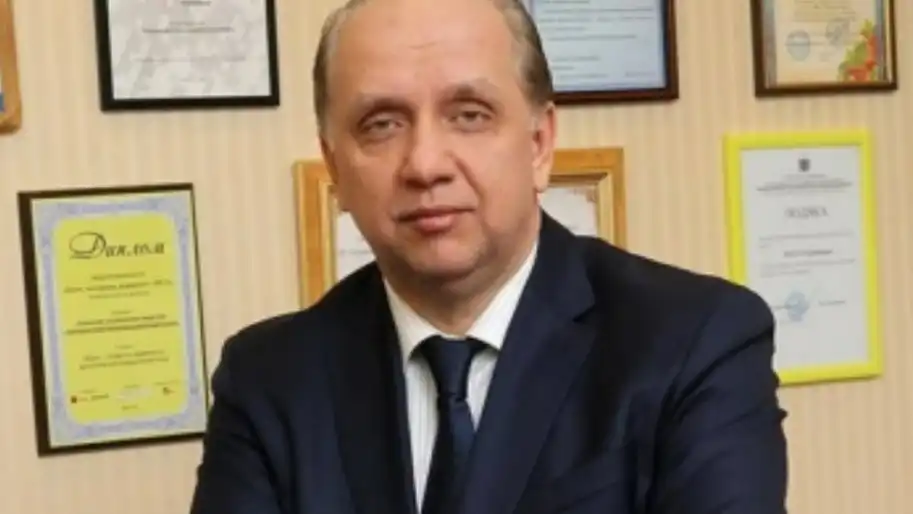

Ukraine and the EU continue the joint process of mutual integration, but this path may be halted due to Ukraine's unwillingness to comply with European directives related to the rehabilitation of the banking sector. JSC Ukrinkom has been in litigation with the Deposit Guarantee Fund for 8 years now just because of the reluctance of the bank's debtors to return funds to the institution. The amount of debt obligations reaches more than $150 million. And reputable and well-known companies that, according to official data, are absolutely profitable are among these debtors. Can Ukraine lose the momentum of integration into the EU? We will discuss this issue with Volodymyr Klymenko, banker and chairman of the supervisory board of JSC Ukrinkom.
Mr. Klymenko, how do you assess the recently announced proposals to raise taxes in Ukraine?
Raising taxes is the only way to fill the budget quicklywhen the economy is not generating profits. However,the main question is, why is the economy not growing? And in Ukraine, the answer is known: corruption and non-transparent rules of the game. I won't talk about corruption; that's the responsibility of the relevant authorities, but I can talk about investments that can contribute to economic growth.
Is it possible to invest in wartime?
Transparent rules of the game and the rule of law are important. If decisions of the country's courts are madebased on someone’s influence rather than the law, investors will think twice before investing in a country's economy that operates outside the rule of law. We can achieve transparency in the business environment, reduce corruption risks, and ensure effective justice only when the laws apply equally to everyone. Especially considering the decision made at the political level to integrate into the EU.
What changes does EU integration bring to Ukraine?
One of the priorities on the way to achieving this ambitious course is the complete harmonization of Ukrainian legislation with the legal standards of the European Union. My words also confirm the position of the US Government. Simply put, no investments in Ukraine are possible without harmonizing
Particular attention should be paid to the adoption and implementation of European directives, such as EU Directive 2014/59, on the rehabilitation and resolution of banks.
This is a directive to return banks to dynamic financial activity after debt repayment, isn’t it?
Correct. It can become one of the key drivers of economic growth. After all, many banks' assets are blocked today due to protracted litigation initiated by the Deposit Guarantee Fund (DGF) after the so-called bank collapse in 2014-16, undertaken by Ms. Gontareva, the former head of the DGF. The scheme is simple: bank assets temporarily managed by the Deposit Guarantee Fund are auctioned off for 5% of their actual market value. Then, I have one question: how can the Fund have such unreasonable rights? Does the state budget get anything from such a sale? The answer is, obviously, no. The country's budget will get more when the bank's assets are used to yield profit, which is related to taxes, new jobs, salaries and economic development, rather than a black Friday-style sale. Therefore,
So, what is the essence of the litigation between Ukrinkom and the Deposit Guarantee Fund?
This process has been going on for over 8 years. The key issue in the case is the status of JSC Ukrinkom, which is related to the recognition of the Claimant's ownership rights to the claims under the Loan Agreement concluded under its previous name - JSC Ukrinbank. This is the same company with the same Unified State Register of Enterprises and Organizations code. We changed the name after we ceased to exist as a bank, not to mislead people. These European directives, which are an integral part of the harmonization of legislation, clearly define such problematic relationships as those between Ukrinkom and the DGF.
What if Ukraine does not implement the European directives in this area?
Further European integration will be in question. To join the EU, we have to adopt the standards that work there. And the EU Directive 2014/59 is fundamental. Its adoption shows our readiness for change. Otherwise, what we do is imitate reforms.
Do the bank's debtors understand this?
Obviously, they do. However, they think they can "skip" these requirements and simply not pay according to their loan obligations, which they guaranteed in the corresponding agreement. And this is not a small amountthat reaches $150 million. Now subtract 5% of this amount, about $7.5 million. This is the amount our debtors are hoping for in case the Deposit Guarantee Fund wins. That's why I say that if we want to join the EU, we have to play by civilized rules, not by the principle of the nineties: "Cowards are the only ones to repay debts." The Ukrinkom case indicates the country's readiness for reforms and changes towards the EU.
Who we are: About us, Contacts. How we write news and our principles: Editorial code. We did our best. If you found this valuable – please support us.
To request a correction, please send an email.