
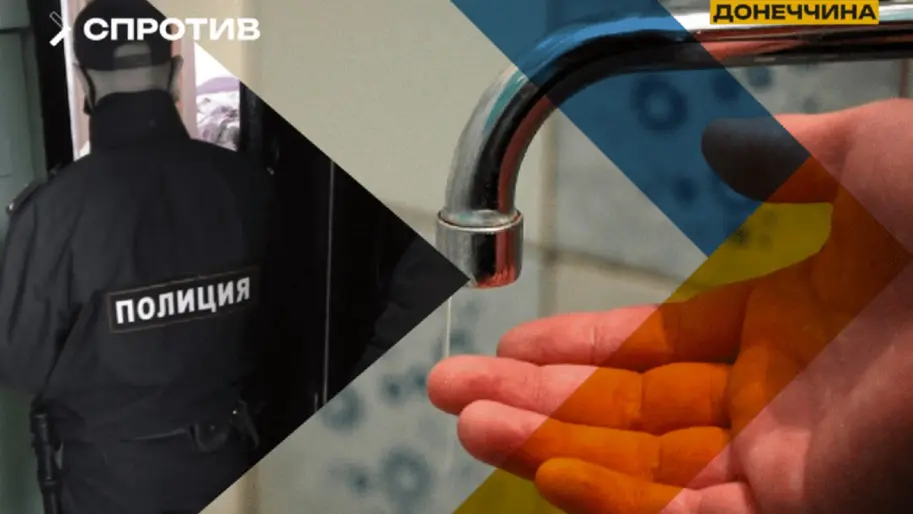

The occupation administration conducted large-scale raids in the occupied territories of the Donetsk region to search for "illegal connections" to the water supply and reported more than 60 cases. This is reported by the National Resistance Center.
The National Resistance Center emphasized that the actual goal of the campaign has nothing to do with communal supervision - it is a tool to control and punish the population trying to survive in conditions of chronic water shortages.
According to the Center's sources, the raids were planned as a centralized action with maximum coverage of populated areas. The executors were set internal requirements for the number of "identified violations," which confirms the punitive nature of the campaign. The inspections covered about 14,000 apartments, 5,000 private houses and 1,000 commercial facilities - in fact, every yard, regardless of the real situation with water supply.
It is noted that during these raids, even temporary emergency hoses, backup connections or pipes that residents used due to many days of interruptions or a complete lack of water were recorded. In the private sector, inspectors cut off houses from the network without checking whether there were actual residents, which is especially true of so-called "ownerless" housing. Also under attack were residents of the upper floors of houses where water has not been supplied for weeks, and families who installed backup supply points to meet minimal household needs.
The National Resistance Center analysts emphasize that the main reason for such "checks" is the critical failure of the occupation administration to restore the infrastructure.
"Against the background of collapsed water hubs, lack of technical staff and lack of repairs, the occupiers shift responsibility to the population, creating the appearance of "combating violations". Instead, the real conditions - dried up taps, industrial water from tanks, queues at wells and unsanitary conditions - are deliberately concealed.
The carnival raids in the Donetsk Region are not an attempt to restore order in the water supply system, but a way to compensate for the managerial failure of the occupation authorities. Instead of repairing the networks, people are being pressured and punished, and water shortages are turning into another tool of control over citizens," the Center adds.
As the Ukrainian News agency earlier reported, in the temporarily occupied Donetsk Region, instead of restoring water supply, the russian "administration" handed out a manual on "how to collect water in winter."
Who we are: About us, Contacts. How we write news and our principles: Editorial code. We did our best. If you found this valuable – please support us.
To request a correction, please send an email.