

The corporate conflict between the Ukrainian company GNT Group and the funds Argentem Creek Partners (ACP) and Innovatus Capital Partners has turned into one of the most high-profile business stories of recent years. GNT, which had been building its stevedoring business in the Odesa port for more than three decades, found itself on the verge of total destruction after the creditors initiated enforcement proceedings and took control over the companies.
The creditors accused the partners of the disappearance of pledged grain, but GNT explained that the grain had spoiled due to the port blockade at the beginning of the war, while the loan itself was secured by much larger assets — an entire stevedoring complex. Instead of dialogue or restructuring, ACP and Innovatus chose a forceful scenario, effectively paralyzing operations.
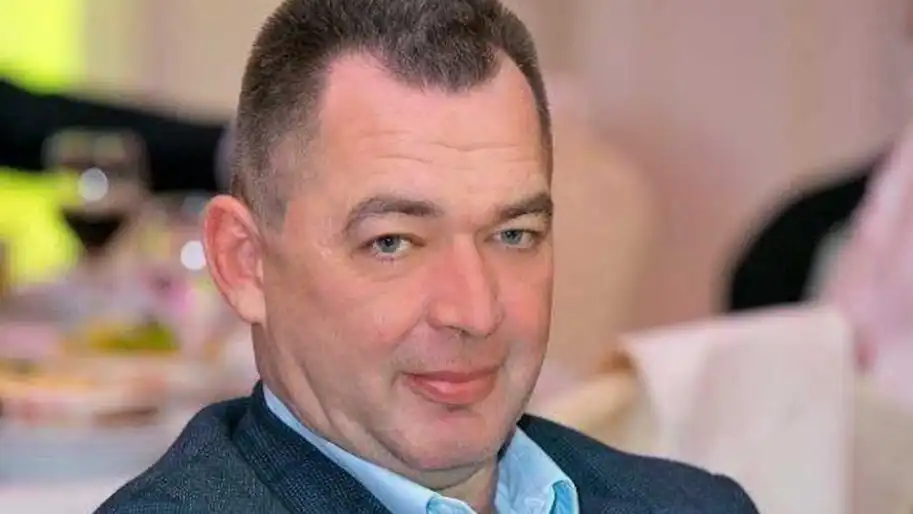
One of the co-owners of GNT Group, Volodymyr Naumenko, spoke about this in detail in his interview with Censor.
The Ukrainian businessman notes that as a result of the creditors' actions, an entire system that for decades had provided jobs for thousands of people and handled up to 5 million tons of cargo annually was destroyed. The consequences are felt not only by the company but by the country as a whole:
"The situation with our company is a mirror of what is happening in Ukraine. The Ukrainian authorities have shown that they are not even going to attempt to understand the situation or protect Ukrainian business. Because of some other interests, they are ready to let you be trampled."
Naumenko emphasizes that in wartime, the port industry requires special support. Ukraine has lost the ports of Mariupol and Berdiansk, while the ports of Mykolaiv and Kherson are effectively non-operational. The remaining ports are overloaded, and at the same time, strategic assets are being destroyed due to corporate conflicts.
"The port industry needs support now more than ever. Enemy strikes on infrastructure are intensifying. We have lost the ports of Mariupol and Berdiansk, effectively lost the ports of Mykolaiv and Kherson. And meanwhile, the remaining ports are underutilized. Instead of supporting those who know how to work and who are ready to develop the industry even under such conditions, we have simply been trampled."
Naumenko's arrest and the subsequent resale of GNT's assets for next to nothing became part of a strategy that the company calls classic raiding. At the same time, creditors refused even proposals to repay the debt through third parties, including well-known Ukrainian businessman Adnan Kivan.
Volodymyr Naumenko remains in custody in Kyiv. He calls the charges completely fabricated and commissioned by the creditors. The businessman insists that the dispute over which he is being held has not only a commercial, not criminal, nature but also that he personally has nothing to do with it.
"How I personally ended up in this deal is unclear. I am not an executive, I have no authority to sign a contract. I was 'dragged in' as a beneficiary," he emphasizes.
Today, the GNT story has gone far beyond a business dispute. It is now a matter of Ukraine's investment climate, trust in its legal system, and the state's ability to protect national business. That is why Naumenko, together with his partners, has appealed to the European Court of Human Rights, where the case Naumenko v. Ukraine has already been opened.
"Of course, I am not 'against Ukraine,' I am for Ukraine. I am against the system that exists today: the judicial system, the law enforcement system, the system of protecting Ukrainian business."
Thus, the conflict with Argentem has become a symbol of a broader problem: instead of protecting national business during wartime, Ukraine allowed foreign funds to destroy a strategic sector, leaving behind devastated enterprises and thousands of people out of work.
Who we are: About us, Contacts. How we write news and our principles: Editorial code. We did our best. If you found this valuable – please support us.
To request a correction, please send an email.